Best Electric Hand Planers for Precision Woodworking
Electric hand planers convert rough stock into smooth, dimensioned boards with accuracy and speed. This guide reviews the top-rated models available on Amazon, highlighting power, cut depth, and feature sets that matter for hobbyists and professionals alike. Whether you’re edging doors, cleaning up rabbets, or flattening stock, these options provide reliable performance and safety. The overview below helps compare capabilities at a glance and explains what to consider when choosing the right planer for your shop.
| Product | Brand | Motor Power | Cutting Width | Key Feature |
|---|---|---|---|---|
| WEN 6530 | WEN | 6 Amp | 3-1/4 in | 34,000 cuts/min; rabbeting guide |
| WEN 6534 | WEN | 8 Amp | 4-3/8 in | 32,000 cuts/min; large capacity |
| Bosch PL2632K | Bosch | 6.5 Amp | 3-1/4 in | Dual-mount fence; ambidextrous lock-off |
| WEN 6528 | WEN | 3.8 Amp | 2-3/8 in | Lightweight; 32,000 cuts/min |
| DEWALT DCP580B | DEWALT | Brushless (bare tool) | 2 mm max depth | Fast removal; brushless motor |
WEN 6530 6-Amp Electric Hand Planer
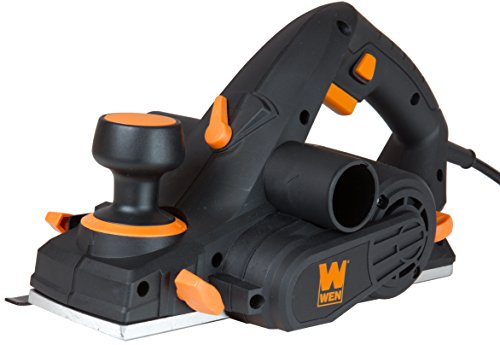
The WEN 6530 is a compact, affordable option ideal for hobbyists and small projects. Its 6-amp motor delivers up to 34,000 cuts per minute, helping you remove stock quickly while maintaining control. A depth range from 0 to 1/8 inch across 16 positive stops supports precise adjustments for tasks such as edge planing and smoothing rough boards. The included rabbeting guide enables 5/16 inch rabbets, useful for joinery and decorative work. Ergonomics favor comfort during longer sessions, with a manageable weight and straightforward adjustment system.
WEN 6534 8-Amp Electric Hand Planer
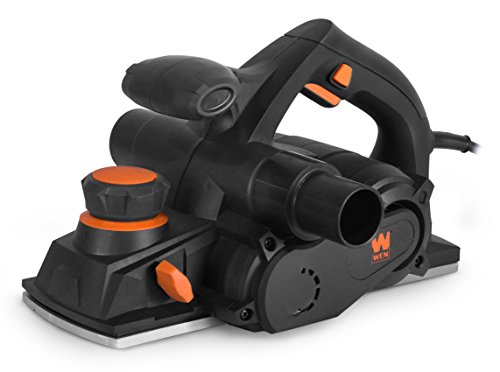
For larger workloads, the WEN 6534 offers an 8-amp motor that pushes up to 32,000 cuts per minute, with a spacious 4-3/8-inch cutting capacity. This size makes quick work of planing 2x4s and 4x4s or preparing wide boards for joinery. It retains 16 positive depth stops, allowing precise removal from 0 to 1/8 inch. The tool balances power and control, making it well-suited to rough stock removal and finishing passes on broader surfaces. Consider this model when your projects regularly require wider stock and faster throughput.
Bosch PL2632K 3-1/4 In. Planer Kit

The Bosch PL2632K combines a 6.5-amp motor with a 3-1/4-inch planing width for efficient performance on standard stock. It features a dual-mount guide fence, enabling consistent planing from either side of the workpiece, and a protective shield along with no-mar overshoes to protect finished surfaces. The ambidextrous lock-off release button and a lock-on option reduce startup risks and support longer sessions without fatigue. This kit suits users who prioritize accuracy and a flexible fence system.
WEN 6528 3.8-Amp Electric Hand Planer

The WEN 6528 provides a lightweight option at about 4.3 pounds, with a 3.8-amp motor capable of up to 32,000 cuts per minute. It offers 9 positive depth stops, allowing 0 to 1/16 inch adjustments for precise finishing passes. This model is well-suited for beginners or users seeking a balance between portability and capability, particularly when working on smaller boards or in tighter spaces where maneuverability is key.
DEWALT 20V MAX Planer (Bare Tool)

The DEWALT DCP580B runs on 20V Max power with a brushless motor designed for efficiency, delivering up to 30,000 cuts per minute and a maximum cut depth of 2 mm (roughly 1/32 inch). This bare-tool option prioritizes runtime and lightweight handling for cordless operation, enabling planing tasks away from outlets. It’s a strong pick for mobile workshops or projects where flexibility and reduced weight are prioritized over sheer depth of cut. Note that battery compatibility and runtime should factor into your purchase decisions.
Buying Guide
Key considerations help match the right electric hand planer to your shop needs. Start with planned usage and stock size to choose between compact and wide-cutting models.
- Power and speed: Higher amperage generally means faster material removal and the ability to plane tougher woods. For frequent work on hardwoods or larger boards, models in the 6–8 amp range are common, while cordless options prioritize battery life and portability.
- Cut width and depth: A wider cutter improves efficiency on large stock; depth stops determine how fine or aggressive each pass is. If you regularly shave small amounts, ensure the depth increments are precise and repeatable.
- Fence system and alignment: A dual-mount or adjustable fence supports consistent results along the edge or face of a board. Look for easy micrometer-style depth adjustments and anti-kickback features for safety.
- Weight and ergonomics: Lighter planers reduce user fatigue in long sessions. For overhead work or one-handed use, balance and grip comfort are critical.
- Accessory compatibility: Some kits include rabbeting guides, protective shields, and no-mar overshoes. Consider what is included and what may be needed separately to complete your setup.
- Battery vs. corded: Corded planers deliver steady performance but require outlets; cordless tools offer portability with trade-offs in runtime and potential weight from batteries. Bare tools require you to supply batteries and chargers if needed.
- Safety features: Lock-off switches, anti-kickback design, and automatic shutoffs enhance safety. A lock-on button is useful for extended planing sessions but ensure it’s easy to disengage when needed.
Performance expectations vary by user type. Professionals often favor planers with wider cuts, higher RPM, and robust fences for repeated accuracy. DIY enthusiasts may prioritize portability, lower price, and simpler adjustments. When selecting, consider your typical projects—edge planing for doors, flattening, bevels, rabbets—and how a given model supports those tasks without overcomplicating setup or maintenance.
Maintenance and accessory care also matter. Regularly inspect the guards, replace dull blades, and keep guide fences aligned. Store planers in a dry, stable environment to prevent rust and ensure consistent performance over time.