Best VR Drone Racing Kits for Immersive FPV Flying
The following VR drone racing kits are among the top options for American FPV enthusiasts, beginners, and those seeking immersive first-person flight. Each kit combines FPV goggles, a controller, and a racing drone to provide real-time, low-latency visuals and responsive control. Use this guide to compare setup ease, safety features, and expandability across five well-regarded kits.
| Product | Brand | Flight Type | Best For |
|---|---|---|---|
| APEX FPV Drone Kit | APEX | Manual / Beginner Modes | Immersive FPV, freestyle |
| Cetus FPV Kit | BETAFPV | RTF Brushed | All-in-one starter |
| Drone with VR Goggles Headset | EcuFlyAi | FPV, 2 Cameras | Dual perspectives, ease of use |
| EZ Pilot Indoor Outdoor Racing Kit | Tiny Hawk | RTF | Kids and beginners |
| Mini 2.4G Racing Drone Kit | Helixsun | RTF | Indoor fun, beginner-friendly |
APEX FPV Drone Kit

The APEX FPV Drone Kit combines a 120° field of view for immersive FPV flight with low-latency transmission, giving a smooth real-time experience. It supports manual flight with a throttle rocker that has no spring-back, enabling freestyle maneuvering for more advanced pilots. A dedicated beginner mode (Altitude Mode) helps novices achieve stable flights before advancing to Manual Mode. The included FPV goggles enhance immersion, while the remote controller is designed to be intuitive for new pilots and scalable for improving skills over time.
BETAFPV Cetus FPV Kit

The Cetus FPV Kit is tailored for FPV newcomers, featuring a brushed Cetus Whoop quadcopter, LiteRadio 2 SE transmitter, and VR02 goggles. It emphasizes safety with self-protection features for emergencies and low-battery scenarios. The included transmitter supports FPV simulator compatibility, allowing practice with PC-based simulators before real flights. The VR02 goggles provide an integrated VTX and camera feed, with OSD information visible to help pilots monitor flight status during sessions.
Drone With VR Goggles Headset

This drone package blends FPV flight with dual-camera options and a 150° adjustable tilt camera for diverse shooting angles. It offers optical flow hovering for stable positioning and a brushless motor setup that improves durability and flight smoothness. Propeller guards add safety during learning, while a user-friendly interface supports beginners moving toward more advanced piloting as confidence grows.
EZ Pilot Indoor Outdoor Racing FPV Kit
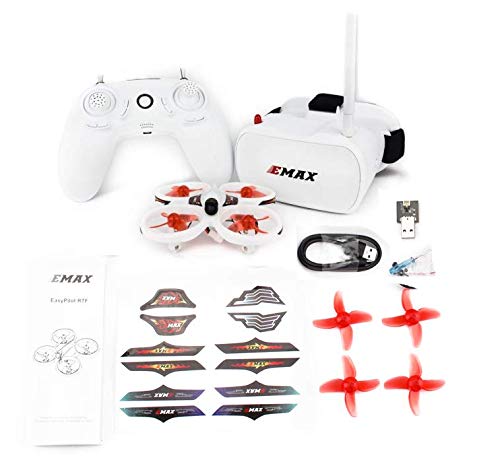
The EZ Pilot is designed for kids and beginners, featuring altitude control and a true FPV view with 5.8 GHz goggles. The kit emphasizes a one-stick flying experience to simplify learning curves and offers real-time FPV feedback without requiring a smartphone or Wi-Fi. It provides a hands-on piloting experience while fostering foundational flight skills through accessible, guided practice.
Mini 2.4G Remote Control Racing Drone Kit

The Helixsun kit focuses on accessible, real-time FPV with a 5.8 GHz transmission and a wide-angle HD camera. It offers up to five minutes of flight time per charge, a modular battery design, and a 2.4G remote controller with an extended range. This kit supports beginners seeking a compact, indoor-friendly racing experience with straightforward setup and hands-on learning opportunities.
Quadrotor Drone DIY Kit

Note: This DIY kit is included for readers interested in a hands-on, engineering-focused project. It combines brushless motors, optical flow positioning, and a one-click takeoff/landing feature. It is designed for enthusiasts ages 14 and up who want to learn drone mechanics through assembly and experimentation, offering a path to more complex builds and customizations beyond simple RTF packages.
Buying Guide: Key Purchase Considerations for VR Drone Racing Kits
- Skill level and learning curve: Beginners benefit from kits with altitude hold, assisted modes, and simulators. Advanced pilots may prefer manual modes and higher agility for freestyle flights.
- Flight system and latency: Look for low-latency 5.8 GHz transmission, wide-FOV goggles, and robust video feeds to minimize delay and maximize situational awareness during races.
- Durability and protection: Brushed versus brushless motors, robust frame designs, and protective guards influence resilience in indoor and outdoor environments.
- Safety features: Self-protection, emergency landings, and secure propeller guards help prevent damage and injuries while learning.
- Expandability and compatibility: Transmitter compatibility, FPV simulator support, and future upgrade paths can extend the kit’s lifespan as skills grow.
- Portability and setup time: All-in-one RTG (ready-to-go) kits are convenient for beginners, while modular systems suit hobbyists who want custom builds.
- Educational value: DIY kits offer hands-on learning about drones, electronics, and programming, appealing to STEM enthusiasts.
These considerations help align a VR drone racing kit with user goals, whether it’s mastering FPV skills, engaging in casual racing, or pursuing a STEM-oriented project. Each recommended kit offers different balance points among ease of use, immersion quality, and expandability to accommodate a broad range of American pilots.