Best Styrofoam Balls for Planets: Top Planet-Building Craft Kits and Balls
Styrofoam balls are a popular, lightweight option for creating mini planet models, classroom solar systems, and craft projects. This guide focuses on durable foam spheres in a range of sizes that help kids and educators build accurate, colorful representations of the solar system. Below you’ll find five highly relevant products, each with details on size variety, materials, and ease of use. A quick buying guide follows to help you choose the right kit for projects at home or in the classroom.
| Product | Sizes | Best For |
|---|---|---|
| Bargain Paradise Foam Balls Set | 0.8″ – 3″ | Planet building, school projects |
| Fansunta Solar System Kit | 0.78″ – 2.76″ | Mixed-size solar system models |
| Ayfjovs Solar System Kit | 20 white balls, various sizes | Educational STEM kits |
| AHKUNMT 245PC Foam Balls | 0.8″ – 2″ | General crafts, sun/planets |
| AHKUNMT 3-Inch Foam Balls | 3″ | Large planet modeling |
Bargain Paradise Foam Balls Set

The Bargain Paradise kit provides a value-packed assortment of 500 foam balls in five sizes: 0.8″, 1.0″ (1”), 1.2″, 1.6″, 2″, and 3″ inches. This range is ideal for building layered, multi-sized planet models and a solar system display. The set includes a mix of small to very large foam balls, making it suitable for classroom activities, wedding decor, and DIY planet projects. The foam balls are described as durable for repeated use in arts and crafts, with broad applicability for painting, gluing, and decorating. Use them to craft continents, rings, or asteroid belts to accompany your solar system display. The instruction-friendly bundle supports large projects and provides enough pieces for several students or multiple displays.
Fansunta Solar System Project Kit

This kit includes 14 mixed-sized polystyrene spheres and 10 bamboo sticks, providing a well-rounded option for constructing a hands-on solar system model. The balls vary in diameter, including sizes around 0.78″ to 2.76″, ensuring realistic scale for planets and the sun. Made from high-density polystyrene, the balls are lightweight and smooth for easy painting and decorating. The natural bamboo sticks offer sturdy support for positioning planets around the sun. The kit is designed for simple assembly, making it suitable for science classrooms, homeschool projects, or interactive family activities. It supports visual learning through tactile, color-filled planet representations.
Ayfjovs Solar System Kit
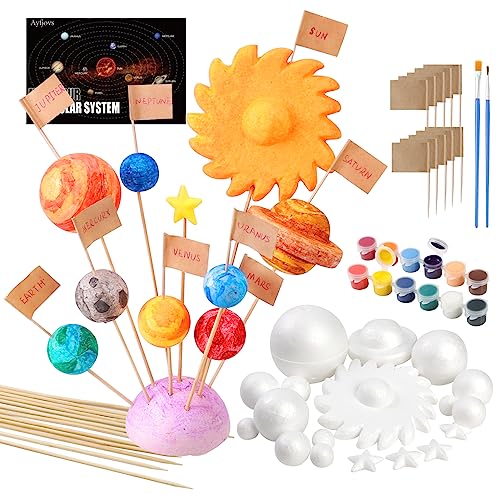
The Ayfjovs kit presents a comprehensive solar system model package with 20 white foam balls in multiple sizes, plus color pigments, toothpick flags, painting brushes, bamboo sticks, and a orbit card. This bundle is designed to support STEM learning by enabling children to recreate the positions and relative sizes of planets while labeling each orbit. The high-density polystyrene foam is lightweight and smooth, suitable for painting and detailing. The included colors and tools make it easy to visualize planetary differences, making the kit a strong choice for science fairs, classroom presentations, and home science projects that emphasize exploration and understanding of the solar system.
AHKUNMT 245PC Foam Balls

With 245 pieces ranging from 0.8″ to 2″, this set is a versatile option for a broad range of crafts, including planetary models, snowmen, and festive decorations. The high-density solid foam minimizes dents and cracks and is lightweight with no strong odor, making it suitable for repeated use. The detailed features highlight the balls’ paintability and ease of use for kids and adults alike. The product notes emphasize the foam’s durability for long-lasting crafts and the ease of turning plain spheres into colorful planets or other decorative elements for classroom displays or home projects.
AHKUNMT 8 Inch Foam Balls

This larger pair of 8-inch foam balls extends the model scale for impressive planetary orbits, especially for display pieces and classroom demonstrations. The kit emphasizes a solid foam composition that is durable enough for handling and repainting. The included crafts guidance notes highlight the various ways to decorate, color, and mount the spheres to represent different planets or celestial features. The product targets educators and hobbyists seeking larger-scale representations for visual impact or exhibition purposes.
AHKUNMT 12-Inch Half Balls

For large-scale solar system projects, half balls at 12 inches offer a dramatic option for planet modeling, hemispheric constructions, and prominent classroom displays. The product notes emphasize the solid foam material’ resistance to dents and wobbly edges, along with ease of painting and detailing for vivid, educational displays. The half-ball design supports mounting or stand displays, enabling dynamic, interactive planet scenes in both home learning environments and school settings.
Buying Guide
Key purchase considerations when selecting styrofoam balls for planet projects:
- Size range: Choose a kit with a mix of small to large spheres to accurately represent orbit scales and planet variety. For detailed models, include mid-range sizes (1″-2″) plus larger pieces (3″ or more).
- Material and finish: High-density polystyrene foam offers durability and easy painting. Smooth surfaces improve paint adhesion and reduce crumbling during handling.
- Completeness: Kits that include supporting accessories (stems, sticks, flags, or orbit cards) help students assemble multi-planet displays quickly and coherently.
- Ease of use: Lightweight foam is ideal for younger students, while sturdier, larger balls suit adult-led demonstrations. Consider whether the package includes mounting options.
- Educational value: Look for kits that promote learning about planet sizes, orbit ordering, and simple solar system concepts through hands-on activity.
- Safety and non-toxicity: Most craft foams are non-toxic and weigh very little; confirm any safety notes if the project involves younger children.
- Storage and durability: If you plan repeated use, pick a kit with robust foam and minimal breakage risk, plus a practical storage plan for fragile pieces.
- Color and customization: Some sets include pigments or paints to differentiate planets; this can enhance visual learning and engagement.
Compared to premade plastic models, foam-based kits offer flexible sizing, easier contrast painting, and lower cost for classroom deployment. When assessing options, align size variety with your project goals—whether it’s a simple display, a detailed classroom model, or an interactive learning station.