Best Smoke Pump RC Plane Solutions for Realistic Flight Effects
Enhance your radio-controlled flying experience with reliable smoke pump systems designed for RC airplanes. This guide highlights five top options, detailing how they deliver consistent smoke output, ease of integration, and durability for hobbyist and competitive pilots alike. Whether you need a compact, low-power unit or a robust brushless setup, the right smoke pump can elevate your plane’s performance and realism.
| Product | Brand | Key Feature |
|---|---|---|
| Smoke Pump Gasoline Pump Smoking Pump Adjustable Flow for RC Aircraft | Model | Diaphragm pump with adjustable flow for atomization; direct 1-channel control |
| FrSky SP-1 Smoke Pump – 1000/1300CC Brushless Pump | FrSky Store | Brushless motor, wide voltage, PWM/FBUS control, telemetry via S.Port |
| ZYHOBBY CRRCPRO BLP1000 RC Plane Smoke Pump | ZYHOBBY | Brushless integrated pump with adjustable flow for turbojet engines |
| Smoke Pump with Brushless Motor & ESC for RC Gas Engine Airplane Red or Blue | Miracle | Brushless motor, ESC, CNC 6061 aluminum housing |
| 2 CH RC Airplane F-22 Ready to Fly | WORK | Ready-to-fly foam plane with stabilization and stable RC system |
Note: This article focuses on smoke pump options that directly support RC aircraft effects, including brushless drives and adjustable flow features for reliable atomization and flight-time efficiency.
Smoke Pump Gasoline Pump With Adjustable Flow
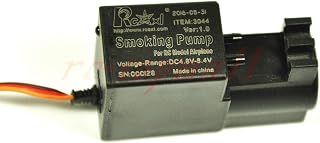
Product Highlights: This unit uses a diaphragm pump to control the smoke/gasoline ratio, enabling sufficient atomization without polluting the airframe. It operates on a low-power motor that can be powered directly from the receiver, eliminating extra battery requirements. The direct-driven design simplifies setup to a single control channel, making it accessible for hobbyists who want straightforward operation without complex programming.
FrSky SP-1 Smoke Pump

The SP-1 integrates a high-efficiency brushless pump capable of delivering up to 1000CC at 7.4V or 1300CC at 8.4V. It supports a broad voltage range (7.4V-8.4V) suitable for 2S LiPo packs. Input options include PWM and FBUS signals for seamless compatibility with FrSky receivers and flight controllers. Telemetry capability via S.Port provides real-time monitoring of pump performance during flight.
ZYHOBBY CRRCPRO BLP1000 Smoke Pump

This brushless integrated pump from ZYHOBBY is designed for turbojet-style operation with an adjustable flow. The integrated design reduces the number of separate components needed, contributing to a cleaner installation in tight airframes. It emphasizes reliable performance with consistent flow control to maintain stable smoke output throughout flights.
Smoke Pump with Brushless Motor & ESC

This package combines a smoke pump with a brushless motor and electronic speed controller (ESC) housed in a CNC 6061 aluminum case. The robust construction supports durable operation in demanding flight regimes and can be integrated with standard RC power systems. The unit is designed for straightforward mounting and dependable feeding of smoke fluid into the combustion or exhaust stream.
2 CH RC Airplane F-22 Ready To Fly
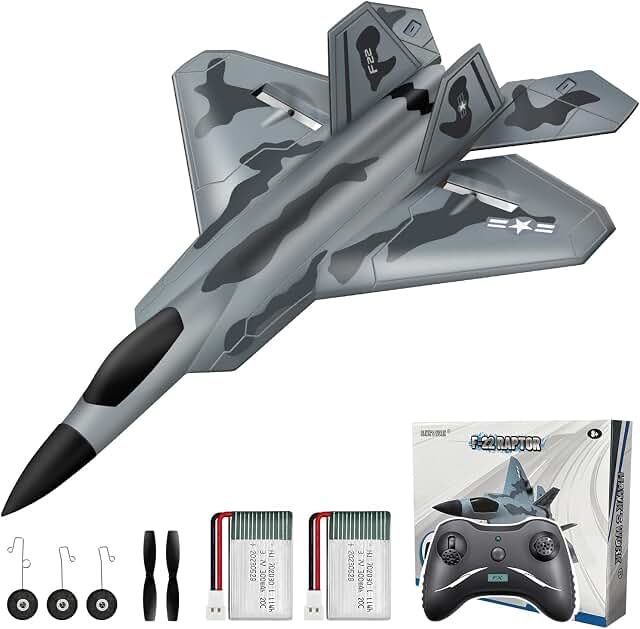
Although primarily a ready-to-fly foam plane, this model includes a built-in stabilization system and a 2.4 GHz control system for simple operation. It serves as a baseline platform to showcase how a smoke pump system can be integrated into an uncomplicated RC airframe, especially for beginners who want a basic testing ground before upgrading to a dedicated smoke setup.
Buying Guide: Key Considerations For RC Smoke Pumps
- Compatibility and power: Check voltage requirements (7.4V-8.4V common for brushless pumps) and ensure the pump can be powered by your receiver or a suitable power rail without impacting flight time.
- Flow rate and atomization: Select a unit with adjustable flow if you want fine control over smoke density. Diaphragm-based systems often provide stable atomization for consistent visuals.
- Control method: PWM and FBUS inputs offer flexible integration with popular receivers. Telemetry capabilities are useful for real-time monitoring during flights.
- Durability and materials: Aluminum housings and CNC components tend to resist vibration and heat, improving reliability on longer flights or demanding maneuvers.
- Weight impact: Consider the added weight of the pump and its fluid reservoir. Heavier setups may require adjustments to CG and overall balance.
- Installation ease: Integrated or compact designs simplify routing of hoses and mounting within cramped airframes.
- Safety and compatibility with fuel: If using gasoline-based smoke fluids, ensure seals and materials are compatible to avoid corrosion or leakage.
- Maintenance: Look for systems with accessible components and straightforward cleaning procedures to maintain performance over time.
- Use-case and pilot skill: For beginners, start with a low-flow, easy-to-control unit and gradually move to more advanced, programmable options as you gain experience.