Best Racing Drones for Beginners: A Practical Guide to Start Fast
Racing drones provide excitement, fast reflexes, and hands-on learning for new pilots. The models below are designed to be approachable, with beginner modes, stable hover, and protective features while still delivering the thrills of FPV flying. This guide highlights five entry-level options, each with unique strengths to match your setup, budget, and goals.
Summary Of Chosen Models
| Product | Brand | Key Strength | Flight Style |
|---|---|---|---|
| APEX FPV Drone Kit, VR70-2.0 | APEX | Beginner mode with stable Altitude Hold | Indoor/Outdoor, manual and assisted modes |
| F108 2.5 Inch FPV Drone Kit | STARDRONE | Optical Flow Positioning, easy takeoffs | Indoor/outdoor, beginner-friendly hover |
| Protos FPV Drone RTf Kit | CADDXFPV | HD video, tiny form, fast charging | Freestyle and transition practice |
| PK01 Drone With Camera | RELIDOL | Integrated screen on remote, gesture control | Indoor beginner flights, quick learning curve |
| EZ Pilot Indoor Outdoor Racing FPV | Tiny Hawk | Built-in goggles, altitude control for kids | Beginner-friendly FPV experience |
APEX FPV Drone Kit With FPV Goggles

The APEX FPV Drone Kit targets newcomers who want a smooth transition into manual flight. It includes FPV goggles and a wide 120° field of view for real-time immersion. The kit features a dedicated Beginner Mode with Altitude Hold to stabilize takeoffs and hover, which reduces the learning curve. When pilots gain confidence, they can switch to Manual Mode for freestyle maneuvers. The package emphasizes durability with drop-resistant construction, helping new flyers practice without frequent repairs.
In practice, the remote control remains forgiving at low speeds while providing precise control in Beginner Mode. The combination of low-latency goggles and a non-spring throttle improves predictability during early flights. For families or classrooms, the integrated system enables shared understanding of flight dynamics and safe handling.
STARDRONE F108 2.5 Inch FPV Drone Kit
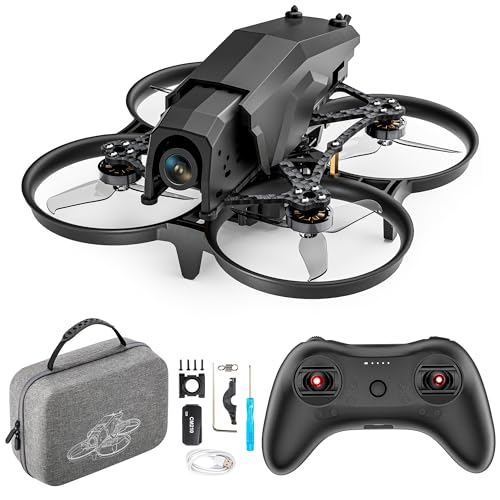
The STARDRONE F108 focuses on stable, beginner-friendly flight with its Optical Flow Positioning and Fusion Altitude Hold. This helps new pilots maintain a steady hover indoors or outdoors, reducing the chance of sudden drops or drift. Pre-configured Smart Modes simplify takeoff and hovering, while Altitude Hold and Stabilize modes let pilots progress toward more dynamic controls. The Turtle Mode Recovery feature adds a safety net if the drone flips, letting users recover with a single tap. It’s a practical bridge between guided flight and freestyle practice.
Portability is another plus: the 2.5-inch frame is light and forgiving in small spaces. Beginners can practice precise movements, then gradually experiment with higher speeds and tighter turns as their skills improve. This model is a strong pick for learners who want reliable performance without complex setup.
CADDXFPV Protos FPV Drone RTf Kit

The CADDXFPV Protos RTf Kit is designed for compact, high-clarity FPV experiences. Its built-in Walksnail 6G VTX delivers HD digital transmission, and the 4.5-inch form factor supports agile freestyle racing while remaining portable. The kit includes a 1080p/60fps camera with a wide 160-degree field of view for immersive footage. A standout feature is the 3-in-1 charging hub, letting pilots recharge three batteries quickly, minimizing downtime between sessions. These attributes make Protos a strong choice for beginners who want quick, reliable flights and approachable upgrades as skills grow.
The lightweight, palm-sized drone reduces fatigue during extended practice sessions. With multiple flight modes and safety protections, newcomers can explore transitions from stabilize to more advanced maneuvers without feeling overwhelmed. The integration with a robust HD VTX helps learners troubleshoot video latency issues and stay aligned with the drone’s position during tight races.
RELIDOL PK01 Drone With Camera And Built-In Screen
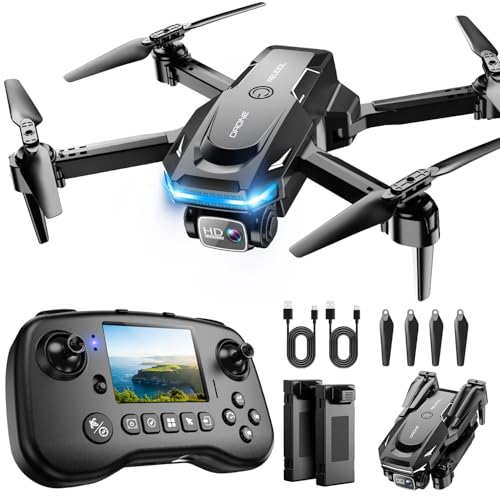
The RELIDOL PK01 stands out with an integrated screen on the remote, eliminating the need for a smartphone to view live footage. This feature streamlines setup for beginners and keeps flight stats accessible on the controller. It relies on brushless motors for improved durability and smoother power delivery, supporting stable flight performance in common beginner conditions. One-key takeoff/landing and headless mode simplify handling, while 360° flips offer quick demonstrations of agility during practice sessions.
With both remote control and app connectivity, pilots can switch between control schemes as they learn. The 1080p camera with an adjustable 80° lens provides versatile angles for capturing indoor or close-range outdoor flights. Gesture control adds a fun, intuitive way to take photos or videos, making this a well-rounded option for learners who want immediate, visible results from every session.
EZ Pilot Indoor Outdoor Racing FPV Kit
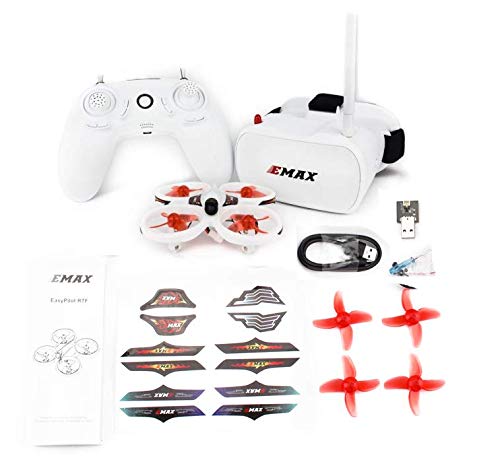
The EZ Pilot is a fitting entry-level kit for kids and beginners who want a true FPV feel without complexity. It includes Real FPV View 5.8 GHz goggles, removing dependence on smartphones, which can improve focus during training. Altitude control and one-stick learning curves help new pilots gain confidence before attempting more complex maneuvers. The combination of a compact design, durable build, and beginner-friendly controls makes it an accessible doorway into the world of FPV racing.
The kit emphasizes safety and ease of use, with a ready-to-fly setup that minimizes the learning curve. For educational settings or family use, the EZ Pilot provides a straightforward path from basic hovering to performing basic aerobatics, all while maintaining the immersive feeling that makes FPV racing compelling.
Buying Guide: Key Considerations For Beginners
- Flight stability vs. agility: Look for models with Altitude Hold or Position Hold modes that help learners hover and stabilize before attempting freestyle maneuvers.
- Goggles and transmission: Low-latency FPV goggles and a robust video link are essential for responsive control and situational awareness.
- Safety features: Beginner-oriented drones often include prop guards, turtle/tip-over recovery, and automatic return-to-home or headless modes to minimize crashes.
- Size and weight: Smaller, lighter drones are easier to manage indoors but may be less forgiving outdoors with wind. Pick a size that fits your typical flying environment.
- Battery life and charging: Short flight times mean more practice; consider models with multiple batteries and quick charging options to maximize learning time.
- Repairability and parts availability: Common spare parts, frames, and motors help reduce downtime after crashes and support ongoing learning.
- Video quality: A clear, stable camera feed helps with tracking, landing, and complex maneuvers. Digital transmission options can offer crisper images at distance.
- Upgrade path: Choose drones with scalable components or easier transfer to higher-performance kits, so you can grow without replacing everything.
- Regulatory considerations: In the U.S., understand local airspace rules and registration requirements if applicable for your drone’s weight and use case.
Beginner pilots should start with guided modes and gentle transitions toward manual control. Practicing in safe, controlled spaces—indoor gyms or open yards—helps build muscle memory and confidence. As skills improve, pilots can experiment with more dynamic flight, longer flight times, and advanced tricks while maintaining awareness of safety and surroundings.