Best Racing Drone Kit for Enthusiasts and Builders: A Comprehensive Guide
Discover top racing drone kits that blend performance, accessibility, and upgrade potential. This guide highlights five standout options that suit beginners and experienced pilots alike, focusing on build quality, FPV capabilities, and extensibility. Each kit offers a unique path to fast, precise flight and DIY learning.
| Product | Brand | Key Strength |
|---|---|---|
| HAWK’S WORK F450 Drone Kit | HAWK’S WORK | Complete DIY frame and essentials for learning and development |
| CADDXFPV Protos FPV Drone RTF Kit | CADDXFPV | Ultra-light, HD video, built-in 6g VTX, beginner-friendly |
| APEX FPV Drone Kit | APEX | Beginners to freestyle with low-latency transmission |
| BETAFPV Cetus FPV Kit | BETAFPV | All-in-one starter kit with FPV goggles and transmitter |
| Tinyhawk Lite FPV Drone Kit | Tiny Hawk | Compact, beginner-friendly with Betaflight-ready tuning |
HAWK’S WORK F450 Drone Kit

Overview: This all-in-one DIY kit centers on the 450mm wheelbase, offering space for flight control, sensors, and additional components like a Raspberry Pi or camera. It’s designed for both beginners learning the basics and researchers exploring advanced development. The kit emphasizes capacity and space to expand, with a quick-start guide to streamline assembly and calibration.
Key features include: a robust 450mm frame with a target take-off weight around 1.8 kg, and a strong focus on education and expansion. The bundled guides help new builders accelerate learning, while the open configuration supports ongoing experimentation. As with any large DIY drone, expect a hands-on build process that yields a solid foundation for flight control and payload integration.
CADDXFPV Protos FPV Drone RTF Kit

Overview: A palm-sized yet powerful FPV kit that blends portability with strong video transmission. It features a 1/3-inch Starvis II camera, a wide 160-degree lens, and a lightweight 6g Ascent HD VTX for stable, low-latency streaming. The kit shines for beginners wanting an approachable entry that still supports advanced freestyle flying.
What to expect: no FAA Remote ID needs for the included flight system, over 30 minutes of flight with three 840mAh batteries, and a compact charging hub that recharges quickly. The design prioritizes safety and efficiency, making it practical for first flights and continued progression into more aggressive maneuvers.
APEX FPV Drone Kit

Overview: This kit targets both beginners and freestyle pilots, offering low-latency 5.8 GHz transmission and a 120° FPV experience via included goggles. The kit emphasizes versatile flight modes, including a beginner Altitude Mode to help new pilots grow confidence before tackling manual control in freestyle mode.
Key attributes: a balance of ease-of-use and performance, a durable build for learning crashes, and a path toward more advanced FPV flying. The included goggles contribute to a cohesive, immersive training environment, making it a practical first step into serious FPV racing.
BETAFPV Cetus FPV Kit

Overview: The Cetus FPV kit is designed as a starter solution for brushed-whoop racing with a built-in learning path. It includes LiteRadio 2 SE transmitter and VR02 FPV goggles, enabling an integrated experience for beginners while offering upgrade potential as skills grow.
What makes it notable: FPV simulation support helps pilots practice offline, and the kit’s protective design aims to minimize damage during early crashes. The included transmitter doubles as a USB joystick for FPV simulators, offering a bridge to real-world flight skills and virtual practice alike.
Tinyhawk Lite FPV Drone Kit
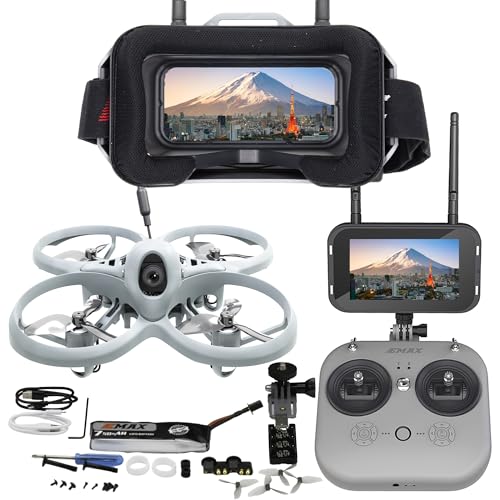
Overview: The Tinyhawk Lite kit focuses on a compact, beginner-friendly FPV platform with Betaflight-ready tuning. It emphasizes real-time FPV experience, with an emphasis on a light weight, long-term upgrade potential, and simple maintenance.
Key points: the kit targets new pilots seeking a low-entry barrier to FPV racing, while remaining capable of high-speed, precise control. The included gear is designed to help pilots learn Betaflight configurations and gradually push into more demanding flights as skills improve.
Buying Guide: Key Considerations For Choosing A Racing Drone Kit
- Skill level and goals: Beginners should prioritize kits with built-in safety features, beginner modes, and straightforward assembly. More advanced pilots may seek higher-end components, lighter frames, and customizable flight controllers for freestyle and racing.
- Frame size and weight: Larger 450mm frames offer stability and payload space, while smaller micro kits are ideal for indoor practice and acrobatic control. Consider where you will fly most often and the payload you plan to carry.
- Flight controller and VTX: Look for flight controllers that support popular firmware (like Betaflight) and VTX options with reliable range and low latency. A modern VTX with good protection helps maintain signal quality during aggressive maneuvers.
- Camera and video quality: A high-quality camera improves line-of-sight awareness and racing performance. Many kits include integrated HD transmission or compatibility with HD options for post-flight viewing.
- Battery life and charging: Long flight times depend on battery capacity and efficiency. A kit with a fast charger or multiple batteries reduces downtime between sessions.
- Upgrade path: Favor kits that allow you to upgrade sensors, FCs, and motors incrementally. Retaining common parts across kits reduces long-term maintenance costs.
- Safety and regulations: Be mindful of local flight rules, licensing requirements, and any registration needs for FPV flights. Many beginner kits are designed for areas with looser restrictions but still require responsible operation.
- Support and documentation: Kits with clear manuals, quick-start guides, and accessible customer support minimize build friction and downtime after issues.
- Cost of ownership: Consider not only the initial kit price but also the ongoing costs of spare parts, upgrades, and batteries. A modular, upgradable kit often proves more economical over time.