Best Racing Drone Full Kit for Beginners and Pros
Racing drone full kits offer a hands-on path to fast, responsive flight, custom builds, and ongoing upgrades. This guide highlights five standout DIY and RTK-style kits that cater to different skill levels—from beginners learning assembly to seasoned flyers chasing speed and precision. Each product section includes a direct Amazon link, a visual, and key features to help you compare options quickly. Use the buying guide to weigh frame size, flight control, batteries, and entry points for your FPV setup.
| Product | Brand | Key Strength |
|---|---|---|
| F450 Drone Kit | WORK | High capacity and expandability for DIY experimentation |
| CADDXFPV Protos FPV Drone RTF Kit | CADDXFPV Store | Ultra-light, compact, built-in digital transmission |
| Quadrotor Drone DIY Kit | — | Complete beginner-to-advanced build with optical flow |
| APEX FPV Drone Kit | — | Beginner-friendly flight modes with low-latency FPV |
| DIY Drone Kit with Brushless Motor & Dual Camera | — | Hands-on STEM project with 360° flips and optical flow |
F450 Drone Kit To Build, Diy Quadcopter Set
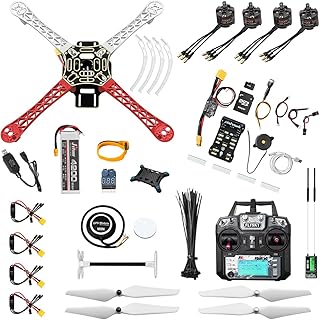
The F450 kit is positioned as a first DIY drone that suits beginners learning assembly and calibration, while also offering room for future enhancements. It emphasizes increased capacity and space for components like flight controllers and sensors. The kit includes a quick-start guide to support new builders, aiming to shorten setup time and reduce common early mistakes. With a wheelbase around 450mm and a take-off weight near 1.8 kg, it provides a stable platform for experiments and data collection.
CADDXFPV Protos FPV Drone RTF Kit
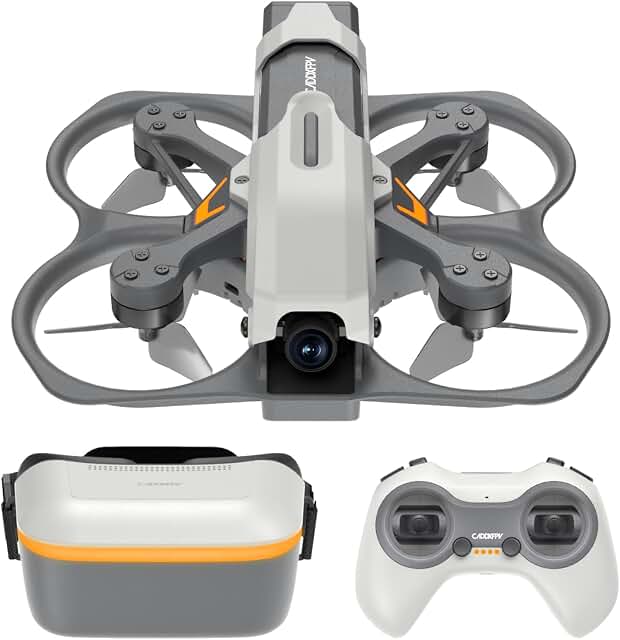
This Protos FPV kit blends tiny dimensions with high-performance FPV capabilities. It weighs roughly 100 g and fits in the palm, yet delivers 1080p/60fps HD digital video. The build features a Starvis II sensor, a 160° wide-angle lens, and a compact 6 g Ascent HD VTX for low latency. A three-battery charging hub enables rapid recharging, supporting over 30 minutes of flight time. Built-in safety protections help minimize downtime and maximize flying sessions.
Quadrotor Drone DIY Kit

This kit emphasizes a thorough, hands-on approach to building a drone from screw to flight. It features optical flow hovering, 360° flips, and one-click takeoff/landing. The project is described as highly instructional, requiring time to assemble but delivering a strong understanding of drone mechanics. It’s suited for enthusiasts who enjoy the process as part of the learning experience and are prepared for a higher difficulty level during build and calibration.
APEX FPV Drone Kit

The APEX FPV kit focuses on a user-friendly entry into FPV racing with beginner Prompts and a 120° field-of-view. It emphasizes a low-latency FPV experience, robust stability, and a manual fly mode suitable for more experienced pilots looking for freestyle capabilities. The included goggles and a broad flight envelope make it adaptable for learners progressing toward advanced maneuvering and aerial acrobatics.
DIY Drone Kit with Brushless Motor & Dual Camera
This STEM-focused kit presents a comprehensive DIY journey, integrating dual-camera setups, optical flow positioning, and high-power brushless motors. It is designed for users aged 14 and above, with a build process estimated around 1.5 hours. The kit emphasizes practical drone knowledge, offering a platform to learn about flight dynamics, sensor integration, and real-time video transmission. It suits learners who want a tangible, showcase-worthy project and long-term capabilities for more complex builds.
Buying Guide
Key purchase considerations help you match a racing drone full kit to your goals and budget.
- Skill level: Choose a kit aligned with your expertise. Beginners benefit from kits with guided assembly and safety features, while experienced builders often prefer modular kits that maximize customization.
- Frame size and weight: A 450mm class (like the F450) offers stability and space for components, while smaller kits prioritize agility and portability.
- Flight controller and transmission: Look for integrated FPV transmitters, reliable video links, and telemetry options. Digital HD video transmission reduces latency for precise racing.
- Power system: Brushless motors and multiple batteries balance speed with flight time. A smart charger or quick-charge hub improves turnaround between flights.
- Expandability: Consider how easy it is to add sensors, cameras, or Raspberry Pi-style computing boards for research or development.
- Safety and regulatory avoidance: Some kits require minimal FAA-related setup; ensure your local rules are observed and the drone includes safety features like return-to-home or altitude limits where appropriate.
- Support and documentation: Quick-start guides and online communities help when assembling, calibrating, and troubleshooting.
In selecting a racing drone full kit, balance the desire for a complete, ready-to-fly experience against the opportunity to learn through a hands-on build. Whether you want a compact, palm-sized racer or a larger, expandable platform for research and custom payloads, these kits cover a spectrum of entry points and upgrade paths to satisfy different American FPV enthusiasts.