Best Race Drone Frames for Freestyle and Racing
Discover top carbon fiber race drone frames that balance weight, strength, and integration space. This guide highlights five standout frames favored by FPV pilots for agility, durability, and ease of setup. Each entry includes core features to help you compare build options for competitive flying and freestyle sessions.
Summary of Chosen Products
| Product | Brand | Frame Size | Key Features |
|---|---|---|---|
| FPVDrone 225mm FPV Racing Drone Frame | FPVDrone | 225 mm | 3K carbon fiber, 25 mm standoffs, ample electronics space |
| Readytosky 150mm FPV Racing Drone Frame | Readytosky | 150 mm | 3K carbon fiber, lightweight, easy to assemble |
| FPVDrone 295mm FPV Racing Frame | FPVDrone | 295 mm | 7 inch freestyle design, light yet strong, 5 mm arms |
| HGLRC Drashark16 75mm FPV Frame | HGLRC | 75 mm | Ultra-light 2.67 g, compact for tight spaces, versatile compatibility |
| DashRC Mark4 HD 5-Inch Frame Kit | DashRC | 225 mm wheelbase | 5 mm arms, DJI FPV compatibility, optimized for internal space |
FPVDrone 225mm FPV Racing Drone Frame
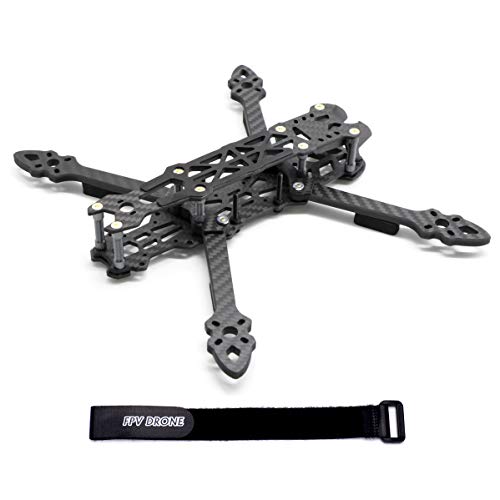
Designed for 5-inch class builds, this frame uses high-quality 3K carbon fiber and features CNC precision for a clean, durable surface. Its 25 mm standoffs provide favorable CG relative to components, and the design offers ample space to install flight controllers, receivers, and power systems. The frame’s aesthetic combines a strong appearance with crash resistance, making it suitable for both beginners upgrading to more capable kits and experienced pilots chasing consistent handling in freestyle sessions.
Readytosky 150mm FPV Racing Drone Frame

This compact 3-inch frame uses high-quality 3K carbon fiber to deliver a lightweight yet rigid platform. Its smaller footprint makes it suitable for indoor or constrained outdoor spaces, while remaining straightforward to assemble for pilots new to FPV builds or those seeking a quick race-ready setup.
FPVDrone 295mm FPV Racing Frame

With a 7-inch freestyle design, this frame blends an extended wheelbase for long-range or high-speed passes with full 3K carbon fiber rigidity. The 5 mm arms contribute to durability while preserving flexibility, making it a strong choice for pilots seeking stability during aggressive maneuvers and sustained flights.
HGLRC Drashark16 75mm FPV Frame

This ultra-lightweight frame weighs just 2.67 g and measures 75 mm wheelbase, making it ideal for agile, tight-space flying. Its carbon fiber construction prioritizes strength and stiffness, while its compact design simplifies component integration. It supports compatible motors, controllers, and cameras to deliver responsive, nimble handling in micro-dcenes and indoor courses.
DashRC Mark4 HD 5-Inch Frame Kit

The Mark4-HD frame is built for DJI FPV Air Unit and similar systems, featuring a 5 mm carbon fiber arm setup for rigidity and durability. Its H-shaped frame design provides ample internal space, a lower center of gravity, and easier wiring paths, which can simplify installation and improve overall flight stability in freestyle and racing scenarios.
Buying Guide: Key Purchase Considerations
- Frame size and wheelbase: Match the frame to your preferred class (5-inch, 3-inch, or micro). Larger frames offer stability at high speeds and extra space for components, while smaller frames excel in agility and portability.
- Arm thickness and material: 5 mm arms provide rigidity and durability for freestyle flying, whereas lighter frames with thinner arms favor speed and jump responsiveness. Look for genuine carbon fiber (3K or higher) for strength-to-weight balance.
- Internal space and layout: Ensure ample space for flight controllers, power distributors, and video transmitters. Check standoff height and the arrangement of the electronics bay to minimize wiring chaos and overheating risks.
- Compatibility: Consider whether the frame natively supports DJI FPV, HD video systems, or specific controllers and motors you plan to use. Some frames are optimized for particular systems and may require adapters.
- Weight considerations: Lighter frames enable quicker climbs and nimble handling but can be more susceptible to damage on hard landings. Heavier frames often endure rough landings better but may trade off acceleration.
- Durability vs. repairability: Carbon fiber frames vary in thickness and reinforcement. Look for protective cutouts, reinforced corners, and modular designs that allow easy replacement of arms or plates after a crash.
- Assembly complexity: Some frames are plug-and-play with minimal assembly; others require careful alignment and custom wiring. Assess your experience level and time available for build and tuning.
- Cost vs. value: More robust frames with premium materials cost more but may offer longer service life and better flight characteristics in demanding conditions. Balance budget with intended use and upgrade plans.
- Community and support: Frames with broad user communities provide more tutorials, troubleshooting tips, and compatible parts. This can shorten build time and improve tuning outcomes.
As you evaluate options, consider how the frame’s geometry will affect center of gravity, motor clearance, and prop wash during aggressive maneuvers. A well-chosen frame paired with a suitable propeller size and flight controller tuning will yield predictable response, stable hover, and spirited performance in both races and freestyle runs.