Best OSD Solutions for FPV Racing Drones: Enhance Clarity and Control
FPV racing relies on real-time data to keep pilots precise and confident mid-flight. On-screen display (OSD) adds essential flight information directly onto the live video feed, helping pilots monitor speed, altitude, distance, and more. This guide highlights five OSD-friendly FPV components ideal for American racing enthusiasts, with emphasis on performance, compatibility, and ease of use. Each product is selected for its ability to integrate smoothly with Betaflight and other common flight controllers, delivering clear, actionable cockpit data during intense races.
| Product | Key OSD/Video Features | Ideal For |
|---|---|---|
| AKK KC04 5.8G VTX + 700TVL Camera | NTSC signal, dual push CH/FR buttons, compact | Beginner to intermediate racers needing a ready-to-fly system |
| SoloGood FOXEER Micro Cat 4 | 1200TVL, starlight night vision, 4:3/16:9 PAL/NTSC | Low-light racing with high-res live feed |
| 5.8GHz VTX with OSD & PIT | OSD via Smart Audio, multiple power levels, PIT mode | Long-range practice and race prep |
| Radiolink 48CH Wireless OSD Transmission | External OSD chip support, Smartaudio, adjustable power | Flexible, cross-brand OSD integration |
| AKK X2-Ultimate 5.8GHz Transmitter | 0.01mW–1000mW, Betaflight/OSD ready | Compact, upgrade-friendly transmitter |
AKK KC04 5.8G FPV Transmitter And Camera System

The AKK KC04 combo pairs a 5.8 GHz transmitter with a 700TVL FPV camera designed for racing quads. It is described as an RTF FPV system suitable for beginners and compatible with all quadcopters and drones. The kit emphasizes a small, lightweight form factor and NTSC signal compatibility, which keeps setup simple and ensures broad compatibility across popular flight controllers. Notable control features include double push buttons for easy channel and frame rate (CH/FR) adjustments, enabling quick tuning between heats without removing goggles. This makes it a strong all-in-one option for entry-level racers seeking straightforward OSD integration and reliable live video.
Key considerations: While the system is designed for ease of use, potential buyers should verify that their receiver and goggles pair well with the specified NTSC signal and that the local club or venue uses compatible channels. Its compact design reduces weight, which can contribute to sharper responsiveness in tight courses. It’s particularly suitable for pilots who value a ready-to-fly package with uncomplicated on-board controls and direct changes in flight parameters through hardware buttons.
SoloGood Foxeer Micro Cat 4 FPV Camera With Night Vision
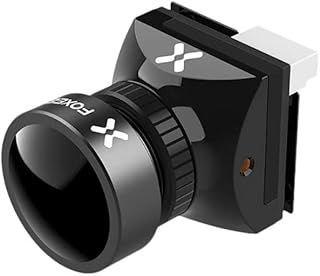
The SoloGood Foxeer Micro Cat 4 delivers high sensitivity night vision with 0.00001 lux capability for low-light flying, making it a compelling option for night races or shaded tracks. With a 1200TVL image sensor and 100dB WDR, this camera offers a clear, balanced feed even in challenging lighting. It supports both 4:3 and 16:9 aspect ratios and PAL/NTSC switching, broadening compatibility with various OSD modules and flight controllers. The large aperture night vision lens contributes to brighter images as the sun fades, helping pilots maintain line-of-sight and hang-time accuracy during dusk or indoor events.
Considerations: While night-mode performance is excellent, potential buyers should ensure their OSD and transmitter pair correctly with the camera’s callouts and that the drive distance and channel selection meet race regulations. This camera is well-suited for racers prioritizing image clarity and luminance in variable lighting conditions, without sacrificing general daytime performance.
5.8GHz FPV VTX With OSD And PIT Mode

This transmitter is noted for its integrated microphone and Betaflight OSD compatibility, allowing pilots to monitor audio feedback and flight data on-screen. It features switchable power levels (250/500/1000/2000 mW) for long-range flight and a PIT mode option to minimize interference when setting up or testing. The ability to adjust channels and power from the transmitter side helps maintain clean frequencies during practice and racing. The combination of long-range capability and OSD integration makes it a strong option for pilots who race across larger venues or need reliable telemetry overlay during chaotic airspace.
Key considerations: Pros include flexible power settings and PIT mode, which reduces accidental transmission during setup. Potential drawbacks might include the need for compatible ground-control software and ensuring the OSD overlay aligns with their flight controller’s display layout for consistent data presentation during races.
Radiolink 48CH 5.8G FPV Camera With OSD

Radiolink’s 48-channel FPV camera supports external OSD chips and Smartaudio, enabling pilots to adjust frequency and other settings via the transmitter rather than manually on the camera. The camera supports adjustable transmission power at 25mW, 100mW, and 200mW, enabling a balance between range and signal stability. This flexibility makes it adaptable for both racing drones and RC vehicles, and the Smart Audio integration simplifies configuring scenes and channels on the fly. It’s especially valuable for pilots who want cross-brand compatibility with their transmitter and race flight setups.
Considerations: The main advantage is configurability and external OSD compatibility; however, pilots should confirm that their receiver and display hardware can correctly interpret the RSSI and telemetry data from Smart Audio setups. It’s a practical choice for racers who tune power and frequency between heats and prefer external OSD data routing.
AKK X2-Ultimate 5.8GHz OSD Transmitter

The AKK X2-Ultimate is a compact, upgrade-friendly FPV transmitter with optional low-power settings (0.01 mW) and up to 1000 mW for standard use, along with intermediate options like 25 mW, 200 mW, and 600 mW. It is designed for Betaflight OSD compatibility and simple one-button frequency and power setup, streamlining in-field adjustments. The combination of a small form factor and broad power-range makes this unit attractive for pilots seeking a versatile, high-precision OSD-enabled link that can scale with their build and racing demands.
Considerations: While the X2-Ultimate provides broad power options and compact size, users should ensure their goggles and VTX-compatible equipment support the chosen power levels and frequency bands. It’s a strong fit for pilots who want a single transmitter capable of evolving with their racing drone’s performance envelope.
Buying Guide: OSD And FPV Racing Setup Considerations
- OSD compatibility: Ensure your flight controller (e.g., Betaflight) and OSD chip support the same data fields (speed, altitude, battery, distance). Verify field overlays align with your goggles’ display to avoid clutter.
- Video transmitter (VTX) power: Higher milliwatt levels extend range but can introduce noise and require more careful frequency management. Look for models with multiple power settings and clean channel switching.
- Channel management: Select transmitters with easy CH/FR controls or Smart Audio/OSD-driven changes to simplify mid-race tuning without removing gear from the frame.
- Low-light performance: If you race dusk or indoor courses, a camera with high sensitivity (e.g., night vision capability) can reduce dependency on external lighting and improve situational awareness.
- Interference handling: PIT mode and noise suppression features help prevent cross-talk during team practices or crowded events. Ensure your setup allows quick isolation when needed.
- Physical compatibility: Confirm the weight and size of the VTX/Cam package fit your frame and do not adversely affect balance or flight time. A compact system can improve agility in tight courses.
- Power and grounding: Ensure the power distribution and grounding for the OSD-enabled components minimize voltage dips during peak maneuvering to avoid flicker in the video feed.
- Firmware and support: Prefer brands with active firmware updates and robust documentation to ease setup and troubleshooting during race days.
- Future-proofing: If you plan to upgrade, choose a transmitter and camera system with scalable features (e.g., broader channel support, advanced OSD overlays, and with Smart Audio compatibility).
Selected products offer a range of features from ready-to-fly kits to highly configurable units that integrate OSD data into your FPV feed. For racers, the right mix of camera sensitivity, video transmitter power, and OSD control determines how effectively you can read flight data while pushing through challenging courses. Consider your typical race environment, your preferred control style, and whether you value simplicity or expandability when choosing among these options.