Best Nano Drones With Camera: Compact Aerial Fun for Every Skill Level
Compact flying cameras offer punchy visuals and simple handling in a tiny package. This guide highlights five nano or small-drones with cameras that balance safety, battery life, and beginner-friendly controls while delivering entertaining footage. Whether you’re looping indoors or capturing quick outdoor shots, these options provide reliable performance without demanding a large investment.
| Product | Brand | Key Feature |
|---|---|---|
| Sky Viper Dash Nano | Sky Viper Store | Indoor agility with self-correcting stability |
| GPS Drones With Camera | Unknown (PL-715) | 4K camera, GPS auto-return, long flight |
| C128 Scout Drone | Unknown | 1080P camera, military styling |
| Drone With EIS 4K Camera | Unknown | 5.0″ screen, 70 minutes, GPS |
| I1 Mini Drone | SuperRC Store | HD camera, 360° flips, indoor-friendly |
Below you’ll find five curated nano-to-small drones with cameras, each described with its standout features and practical use cases. The sections are designed to help you compare flight time, image quality, and ease of use, so you can pick the best fit for beginners, hobbyists, or casual content creators.
Sky Viper Dash Nano Performance RC Drone

The Sky Viper Dash Nano is built for fast, safe indoor flying. Its compact size helps it maneuver in tight spaces, making it ideal for casual indoor flights or small apartments. The drone’s flight software continuously analyzes movement and self-corrects unwanted drift, promoting steadier air with minimal input. It supports one-touch stunts, including 360º flips, which can add a playful element to practice sessions and quick video clips. This model emphasizes control and stability in confined spaces, appealing to beginners and indoor hobbyists seeking immediate results.
GPS Drones With Camera For Adults 4K

This GPS-enabled drone targets more ambitious flyers, offering a 4K camera and robust flight features. Key capabilities include GPS Auto Return, Follow Me, Waypoint Flight, and Circle Fly, which help ensure safety and dynamic aerial options. The 120° wide-angle lens with a 90° adjustable angle lets you capture broad scenes and unique perspectives. With two high-capacity batteries, flight times approach half an hour per battery, totaling extended sessions. The combination of 4K imaging, stabilized footage, and reliable GPS navigation makes this model suitable for beginners ready to graduate to more feature-rich piloting.
C128 Scout Drone With 1080P Camera

The C128 Scout blends a rugged aesthetic with approachable operation. Its 1080P camera captures standard-quality footage suitable for casual clips or education-focused projects. Marketed as a military-style remote control helicopter, it emphasizes stable flight with 2.4G control and a 6-axis gyro for reliable hovering and more confident handling. While not as feature-packed as GPS-based models, it serves as a practical stepping stone for learners building fundamental piloting skills and basic aerial photography practices.
Drone With EIS 4K Camera For Adults

This model features a built-in 5.0-inch screen on the controller, delivering instant FPV without needing a phone. The 4K capture is paired with EIS stabilization for smoother clips, aided by a wide 130° lens and a 90° tilt. GPS-based safety features—Smart Return to Home, Low Battery Return, and Signal Loss Return—add reliability for pilots of varying experience levels. The long-endurance battery setup supports extended sessions, making it a strong choice for creators who want cinematic visuals and stable aerial footage under diverse conditions.
I1 HD Camera Drone For Beginners
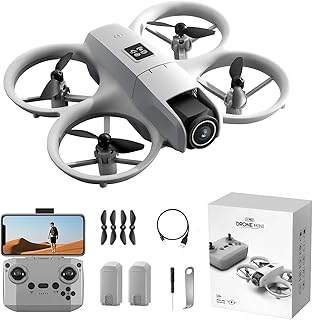
The I1 from SuperRC Store is designed for beginners who want a feature-rich mini drone without complexity. It emphasizes safety and ease with Optical Flow Positioning and Altitude Hold to maintain stable flight in indoor or outdoor spaces. A 180° remote-controlled adjustable camera offers versatile shooting angles, with options for gesture photos, trajectory flight, and basic auto-functions such as one-key takeoff and landing. The included two batteries extend flight opportunities, supporting longer practice sessions or quick shoots for social media clips.
Buying Guide: Key Purchase Considerations And Comparisons
When choosing a nano or small drone with a camera, consider the following factors to align with your goals and environment.
- Indoor vs. outdoor use: If you’ll fly mainly indoors, prioritize compact size, stability features (like optical flow or altitude hold), and propeller guards. For outdoor flights, GPS return and longer flight times become more important.
- Camera quality and stabilization: Look for resolution and stabilization (EIS or gimbal) appropriate to your needs. 1080p is adequate for beginners; 4K is preferred for higher-quality footage and future-proofing.
- Flight time and batteries: Longer flight times reduce the need for frequent recharges. Consider whether the drone uses swappable batteries for extended sessions.
- GPS and safety features: GPS-enabled return-to-home, low-battery auto-returns, and obstacle-avoidance (if available) improve safety, especially for less experienced pilots.
- Control interface: Some drones include built-in screens on the controller, which can simplify FPV and reduce phone dependency. Others rely on smartphone apps for video feed and controls.
- Ease of use vs. feature depth: Beginners benefit from one-key takeoff/landing and headless mode; more experienced users may want programmable routes and advanced flight modes.
- Portability and durability: Small drones should be robust enough to survive minor crashes and frequent transport, especially for travel or on-the-go filming.
- Content goals: If you primarily want quick clips, a drone with easy stunts and quick capture functions may suffice. For creative filming, prioritize stabilization and flexible camera angles.
In summary, choose a model that aligns with your flying environment, camera expectations, and how much you value features like GPS safety, long flight time, and user-friendly controls. The five drones featured here provide a spectrum of options—from ultra-compact indoor performers to GPS-equipped cameras capable of smoother cinematic footage—allowing you to assess what matters most for your first or next aerial project.