Best Stable RC Planes for Easy, Safe Flight and Fun
Choosing a stable RC plane helps beginners learn quickly while still offering room to develop advanced skills. The models below are selected for reliable flight stability, user-friendly controls, and durable construction. Each entry includes real-world features like gyro stabilization, foam builds, and multi-mode flight settings to suit a range of pilots from first-timers to hobbyists.
| Product | Brand | Flight Stability Features |
|---|---|---|
| LEAMBE 4 Channel RC Plane | LEAMBE | Lightweight elastomer foam; 3 flight modes; propeller saver technology |
| RC Airplane Globemaster III | AIGIMU | 6-axis gyro stabilization; two motors; ready-to-fly |
| VOLANTEXRC Ranger600 | VOLANTEXRC | 4-channel control; foam construction; propeller protection; 3 flight modes |
| 2 CH RC Airplane F-22 | WORK | Built-in stabilization; 2.4 GHz control |
| DEERC G650 | DEERC | 6-axis gyro; 3-channel control; long flight with dual batteries |
LEAMBE 4 Channel RC Plane — Beginner Friendly

The LEAMBE P51 Mustang RC plane uses lightweight elastomer foam for outdoor flying and easy handling. Its design supports three modes—Beginner, Intermediate, and Experienced—allowing new pilots to progress at their own pace. A Propeller Saver Technology helps protect the plane from damage during learning, with straightforward propeller replacements if necessary. This model emphasizes stability and simplicity for first-time flyers while still offering engaging aerobatics as skills grow.
RC Airplane Globemaster III — Realistic, Ready To Fly
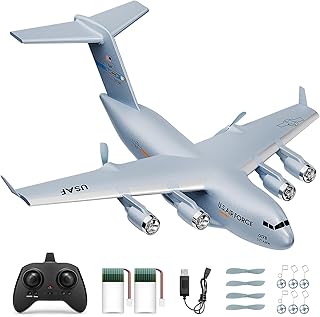
The C-17 Globemaster III RC airplane is designed for immediate use out of the box, with two high-power motors and a 6-axis gyroscope stabilizer. Its realistic scale and precise detailing deliver an authentic flying experience. The 2025 Ready-To-Fly design supports smooth takeoffs and stable landings, with multiple flight maneuvers suited for beginners and more experienced pilots alike. Hand-launch or glide-takeoff options add versatility to training and play sessions.
VOLANTEXRC Ranger600 — 4-Channel Foam RC Plane

The Ranger600 from VOLANTEXRC offers a durable foam construction and a comprehensive accessories kit. Its four-channel remote supports precise ascents, descents, turns, and aerobatics, which helps adult enthusiasts practice advanced maneuvers. The design includes a propeller protection system to guard against common crash damage, and three flight modes accommodate learners through to seasoned pilots, providing a steady progression pathway for developing skills.
2 CH RC Airplane F-22 — Simple Control For Beginners

This F-22 RC glider emphasizes ease of use with built-in stabilization and a 2.4 GHz control system. Light-weight construction supports gentle learning curves and reduces the risk of over-control during initial flights. The design supports simple first flights while maintaining the capability for more confident, longer sessions as skills improve. The two-channel configuration keeps handling straightforward for younger pilots or beginners revisiting model aviation after a break.
DEERC G650 Private Jet — 3-Channel Easy Flight

The DEERC G650 is inspired by Gulfstream-style private jets, blending luxury design with practical stability. It features a 6-axis gyro stabilization and 3-channel control for controlled, confident flight paths. Long flight times come from two high-capacity 350mAh LiPo batteries, extending play sessions and practice periods. The included display stand adds a collectible element for enthusiasts who enjoy both flying and showcasing models.
Buying Guide: Key Considerations For Stable RC Planes
When selecting a stable RC plane, consider these factors to optimize learning, safety, and enjoyment:
- Stability systems: Look for 6-axis gyros or 3-axis stabilization to improve smooth flight and reduce responses to wind or turbulence.
- Control channels: More channels (4-channel or more) allow for complex maneuvers, but 2-3 channels can be ideal for beginners focusing on straight flight and gentle turns.
- Material and durability: Foam constructions offer gentler crashes and easier repairs. Propeller protection systems guard against common damage.
- Flight modes: Multi-mode setups (Beginner, Intermediate, Expert) help pilots progress without overpowering their early flights.
- Power and endurance: Dual batteries or efficient motors extend flight times, enabling longer practice sessions and more opportunities to learn.
- Ease of assembly and setup: Ready-to-Fly (RTF) designs minimize setup time, letting new pilots start practicing sooner.
- Size and portability: Smaller planes are easier to transport and store but may be more sensitive to wind; larger foam planes balance stability and resilience well.
- Safety considerations: Ensure you have a safe flying area, follow local regulations, and use protective gear where appropriate.
Across these options, stable flight tends to come from combined technology—gyro stabilization, robust foam construction, propeller protection, and thoughtful flight-mode design. For beginners, starting with a ready-to-fly model and a three-mode setup is generally the most reliable path to confident, stable flights. For more experienced pilots, planes with 4-channel control and dual-motor configurations can offer dynamic maneuverability without compromising safety.