Best Model Airplanes to Fly: Top RC Kits and Paper Plane Systems
From smartphone-controlled paper airplanes to ready-to-fly RC planes, this guide highlights the best model airplanes to fly. Each option combines approachable entry with expanding capability, making it suitable for hobbyists, students, and family fun alike. Whether you want quick micro-skies for a desk or longer outdoor flights, these picks cover stability, ease of use, and upgrade potential.
Overview Of Selected Products
| Product | Type | Key Benefit |
|---|---|---|
| POWERUP 4.0 The Next-Generation Smartphone Controlled Paper Airplane Kit | Phone-Controlled Paper Plane | Autopilot stability and connected app for flight logs |
| Guillow’s Piper Super Cub 95 Laser Cut Model Kit Blue | Wooden Model Kit | Laser-cut precision for scale-building enthusiasts |
| Balsa Wood Airplane Kit – 4 Pack | Wooden Glider Set | No glue assembly; durable, long-distance slotted design |
| POWERUP 2.0 Paper Airplane Conversion Kit | Electric Motor Conversion | Extends flight time and range for paper planes |
| LEAMBE 4 Channel RC Plane | Ready-to-Fly RC Plane | Beginners-friendly modes and propeller protection |
POWERUP 4.0 Smartphone Controlled Paper Airplane Kit

The POWERUP 4.0 introduces a next-generation smartphone controlled paper airplane experience. The kit uses a Bluetooth module with autopilot control to connect to your device, letting a sheet of paper become a high-speed flyer capable of tricks like loops and hammerheads. Beyond simple flights, Acro Mode enhances stability, even with imperfect wind, by automatically calibrating the aircraft through an onboard computer and a wind stabilizer. This makes it suitable for hobbyists and students who want a teachable flight experience with immediate feedback from the app.
Flight control centers on a robust autopilot interface that tunes performance for different planforms—foam, paper, or even balsa — allowing users to experiment with design changes while preserving flight stability. The POWERUP App ties flights to a logbook and leaderboard, enabling competition and design-sharing among peers. Beginners can start with basic throws, then progress to more complex designs as confidence and understanding grow. The kit’s focused emphasis on connected flying and hobbyist learning makes it a compelling entry point for the broader world of model aviation.
Guillow’s Piper Super Cub 95 Laser Cut Model Kit Blue

Guillow’s Piper Super Cub 95 Laser Cut Model Kit arrives as a blue, 24-inch wingspan model designed for wall-to-wall builders who prefer precision and scale. The kit features laser-cut balsa parts for clean assembly, a full decals set, and vacuum-formed plastic parts to recreate a classic aircraft with a high level of detail. Relying on a flexible approach, builders can choose to fly with rubber-powered propulsion or transition to electric or gas engines for extended flight times and greater scale realism. This kit suits hobbyists who value historical accuracy and hands-on building experience, with enough complexity to hold interest for seasoned modelers while remaining approachable for dedicated beginners.
Balsa Wood Airplane Kit – 4 Pack
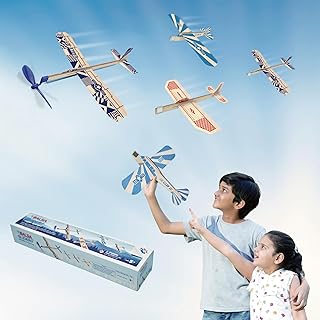
The Balsa Wood Airplane Kit offers a nostalgic, four-pack set designed for outdoor play. Each glider features reinforced noses and 12″ wings to support flights up to about 50 feet when hand-launched or rubber-band powered. The design emphasizes ease of assembly with no glue required: simply slide the wings into pre-cut slots. The natural, ultra-lightweight balsa wood ensures durable, splinter-free construction while delivering classic aeronautical charm. The kit supports STEM learning by illustrating basic aerodynamics and physical principles through hands-on building and flying experiences for kids and adults alike.
POWERUP 2.0 Paper Airplane Conversion Kit

The POWERUP 2.0 kit converts ordinary paper airplanes into motorized flyers. With a high-quality paper plane engine, users can extend flight times well beyond traditional throws. The kit is designed for all ages, making it an inclusive activity from kids to grandparents. It also has educational value by demonstrating core physics concepts in an engaging, interactive way. The unit emphasizes durability: carbon fiber propeller shafts and rugged rear props resist damage from crashes, encouraging experimentation and iterative improvements as flying skills grow.
LEAMBE 4 Channel RC Plane

The LEAMBE 4 Channel RC Plane targets newcomers to RC aviation with a ready-to-fly design and a focus on stability. Made from lightweight elastomer foam, it’s optimized for outdoor use while remaining forgiving for beginners. The aircraft offers three control modes—Beginner, Intermediate, and Experienced—allowing progress at a comfortable pace. A notable feature is the Propeller Saver Technology, designed to protect the propeller and simplify repairs after minor crashes. This model blends approachable flight characteristics with scalable learning potential for hobbyists who want to grow from basic flights to more advanced aerobatics over time.
Buying Guide: Key Purchase Considerations
Choosing the right model airplane depends on your goals, space, and skill level. Here are essential factors to consider to compare options effectively.
- Flight environment: Indoor desk setups favor smaller, low-speed planes or paper-based kits, while outdoor spaces suit larger RC models and high-performance gliders.
- Ease of assembly and operation: Beginners benefit from plug-and-fly options with clear instructions and forgiving handling, whereas seasoned hobbyists may pursue laser-cut or electronics-heavy kits for realism and performance.
- Propulsion and power: Paper airplane kits use micro motors and autopilot electronics, offering quick learning curves. Wooden or foam models often rely on rubber bands, electric motors, or gas engines for longer flights.
- Durability and repairability: Look for robust materials (balsa wood, foam) and features like propeller protection to minimize repair downtime after inevitable crashes.
- Upgrade potential: Some kits (like 2.0/4.0 POWERUP) provide modular upgrades and app integration, enabling longer-term engagement as skills grow.
- Educational value: Kits that illustrate physics concepts, flight dynamics, and engineering processes can enhance STEM learning for students and curious adults.
- Size and storage: Larger kits with detailed components require more space and careful storage, while compact kits suit travel and small living spaces.
- Cost and value: Consider total cost of ownership, including replacement parts or extra batteries, to sustain ongoing learning and fun.
Comparative Insights
Paper-plane-centric kits (like POWERUP 4.0) emphasize digital flight data, autopilot features, and app-based interaction, ideal for learners who enjoy testing designs and tracking progress. Wooden laser-cut options (Guillow’s Piper Super Cub) deliver scale accuracy and traditional building satisfaction, rewarding detailed assembly and display. The Balsa Wood Airplane Kit’s quick assembly suits parents seeking immediate outdoor enjoyment and classroom use, while the POWERUP 2.0 unlocks longer flight times for more dynamic experiments. For beginners who want a ready-to-fly experience with gradient learning, LEAMBE’s RC Plane offers controlled stability and adjustable modes.
Ultimately, your choice should match your intended use—education, casual family activities, or serious hobby progression. If you value tech-enabled logging, performance data, and community challenges, start with smartphone-controlled options. If you prefer tactile building and authentic scale models, laser-cut or balsa wood kits provide a rewarding craft experience. For newcomers, a ready-to-fly RC plane with adjustable modes reduces the barrier to entry while supporting skill growth over time.