Best Mini FPV Drone Kit Picks for Beginners and Enthusiasts
Discover top mini FPV drone kits that blend ease of use with performance. This guide highlights five beginner-friendly or versatile kits, covering ready-to-fly setups, goggles, and transmitters. Each option emphasizes safety features, flight modes, and potential for expansion, helping you choose a kit that matches your FPV goals—from casual learning to quick freestyle sessions.
| Product | Brand | Key Benefit |
|---|---|---|
| All-in-one starter bundle with safety features and FPV simulator support | ||
| Longer flight time and VR goggles with recording function | ||
| Three flight modes and robust beginner-friendly design | ||
| Low-latency FPV experience with beginner mode and manual options | ||
| Ready-to-fly kit with durable frame and included controller/goggles |
BETAFPV Cetus FPV RTF Drone Kit

The Cetus FPV Kit is designed as an entry point for FPV enthusiasts. It includes the Cetus Brushed Whoop quadcopter, LiteRadio 2 SE transmitter, and VR02 FPV Goggles. A standout feature is the self-protection system that triggers an emergency landing if control is lost or battery is low. The kit also supports an FPV simulator for practice before real flights, and the LiteRadio 2 SE can function as a USB joystick for PC-based simulators. The VR02 goggles provide a built-in VTX and camera for immediate first-person viewing.
Key features include self-protection, FPV simulator compatibility, and an immersive goggles setup. The transmitter supports calibration to offset drift over time, helping maintain accurate control. This kit is well-suited for beginners seeking a turnkey experience with learning tools built in, while still offering a path to more complex flights as skills grow.
BETAFPV Aquila16 FPV Kit

The Aquila16 FPV Kit targets beginners seeking stable, predictable flight with built-in DVR and a capable goggle interface. It includes a VR03 Goggles system featuring video recording and compatibility with most Analog VTXs. The 350mW transmission delivers real-time video with relatively stable signals up to 200 meters, supported by a 4.3-inch LCD in the goggles for a clear display. The kit ships with an 1100mAh battery for longer sessions, and an optional 650mAh battery supports a different flight mode when purchased separately.
Flight time and range are suitable for indoor and outdoor practice, while the DVR offers a simple way to review footage. Pilots should note occasional signal cable looseness after crashes, so regular connection checks can help ensure sustained performance. This kit is a good option for learners who want a robust, feature-rich FPV experience without a heavy investment.
BETAFPV Cetus Pro FPV Kit
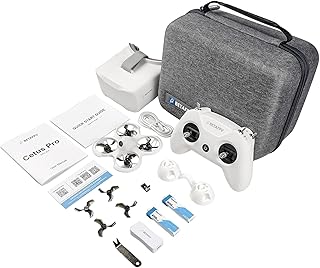
The Cetus Pro FPV Kit is a brushless whoop designed specifically for FPV beginners. It combines three flight modes—Normal, Sport, and Manual—with additional slow/medium/fast speed options to adapt to different environments. An altitude hold function (autohov) provides stability by maintaining height, aiding new pilots in managing altitude without continuous input. This kit allows pilots to progress from basic hovering to more dynamic flight as confidence grows, while retaining forgiving auto-stabilization features.
Three flight modes and altitude hold support a gradual upgrade path from easy practice to more hands-on flying. The included LiteRadio 2 SE and VR02 goggles ensure an integrated experience, though pilots should consider upgrading components for advanced freestyle or racing as needed. The Cetus Pro remains a strong bridge kit for learners targeting broader FPV skills.
APEX FPV Drone Kit

The APEX FPV Drone Kit emphasizes a VR immersion experience with a wide 120° field of view and low-latency transmission. It includes FPV goggles designed for manual control and freestyle in Manual Mode, making it suitable for pilots who want a precise, responsive feel. A beginner mode is available to provide stability and slower response, helping newcomers master basic maneuvers before advancing to manual control. The kit balances accessibility with the potential for more advanced flying as skills develop.
Notes for purchasers include ensuring comfort with manual flight as soon as proficiency grows, and evaluating whether the included controller and goggles align with your target flight style. This kit is a versatile option for those who want to develop both basic piloting and more aggressive, precise control as they progress.
Tinyhawk 3 Freestyle PLUS+ RT F Kit

The Tinyhawk 3 Freestyle PLUS+ RT F Kit offers a ready-to-fly experience with a durable carbon fiber frame designed for freestyle and racing. Included are a controller and FPV goggles, providing an all-in-one package for immediate flights. The lightweight yet sturdy construction helps withstand crashes common in freestyle sessions, while the integrated components provide a cohesive system for immersive flight. This kit is well-suited for pilots who want a compact, resilient setup with reliable hardware for quick progression into more advanced techniques.
When evaluating this kit, consider your preferred flying environment (indoor vs outdoor) and whether you anticipate needing to upgrade radio or goggles for longer sessions, higher resolutions, or extended range. The Tinyhawk 3 kit is a practical choice for those seeking a compact, durable FPV solution with strong beginner-to-intermediate potential.
Buying Guide: Key Purchase Considerations
Choosing a mini FPV drone kit involves balancing ease of use, upgrade potential, and the type of flying you plan to do. Here are several factors to weigh:
- Flight experience level: Look for beginner-friendly modes (altitude hold, stability aids) if you are new to FPV.
- System integration: Kits that include transmitter and goggles offer a cohesive setup, reducing compatibility concerns.
- Immersion and learning tools: Built-in FPV simulators help practice without risking real hardware.
- Flight time and range: Battery capacity and video transmission strength influence how long and how far you can fly, especially indoors.
- Durability and maintenance: Carbon fiber frames and protective features help with crashes and long-term resilience.
- Upgrade path: Consider kits that allow swapping out components (camera, VTX, or antenna) as skills grow.
- Support and firmware: Active communities and regular firmware updates improve repair options and feature access.
- Weight and size: Smaller models are more portable and easier to manage in tight spaces, but may require more precise control.
In selecting a kit, align features with your goals—whether you want a quick learn-to-fly experience, a platform for amateur racing, or a setup that scales into advanced freestyle. Always verify the included components and compatibility with any additional gear you might want to add later.