Best Full-Scale RC Planes for Enthusiasts: Top 5 Ready-to-Fly Models
Explore a curated selection of full-scale RC planes designed for serious hobbyists and newcomers alike. The models below cover advanced power systems, beginner-friendly stabilization, and realistic aerodynamics to deliver engaging flight experiences. Each option is ready to fly with varying levels of setup, so you can choose based on your skill, field conditions, and desired realism. This guide highlights features, ease of use, and durability to help you compare top contenders at a glance.
| Product | Brand | Highlights |
|---|---|---|
| FMS A-10 Thunderbolt II V2 Twin 70mm EDF | Fms Store | Powerful dual motors, 70mm ducts, upgraded servos |
| Volantexrc Spitfire 4-Channel | volantexrc Store | Xpilot gyro, 3 flight modes, one-touch functions |
| C-17 Globemaster III Ready-to-Fly | AIGIMU | 6-axis gyro stabilization, two powerful motors |
| 2-Channel F-22 RC Plane | WORK | Self-stabilization, simple control, beginner-friendly |
| HobbyZone Carbon Cub S 2 | HobbyZone Store | SAFE technology, beginner to experienced modes |
FMS A-10 Thunderbolt II V2 Twin 70mm EDF RC Plane

The A-10 Thunderbolt II V2 from FMS Store introduces a robust power system with dual internal-rotating motors and 70mm 12-blade ducted fans, delivering strong thrust for scale flight and takeoffs. Upgraded 23g metal geared servos replace smaller units, increasing torque for elevator and rudder control. Durable tires improve landing performance on rough fields, contributing to reliable operation under varied conditions. This PNP model (No Radio, Battery, Charger) targets experienced hobbyists who prefer to customize their own radio systems and power setup for precision control.
Volantexrc Spitfire 4-Channel RC Plane

The Volantexrc Spitfire features a 4-channel setup with advanced Xpilot gyro stabilization, offering Beginner (full assist), Intermediate, and Expert modes to accommodate pilots of all skill levels. It uses a brushless motor for enhanced speed and durability, and includes realistic cockpit details, a 3D pilot figure, and a spring-loaded landing gear with rear wheel steering. One-touch flight functions simplify takeoff, aerobatics, and automated returns—ideal for adult hobbyists seeking a feature-rich, user-friendly RC plane.
C-17 Globemaster III RC Plane Ready to Fly
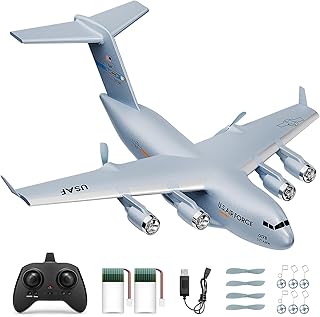
This Globemaster III RC plane offers a realistic, large-scale appearance with meticulous detailing designed to mimic the real transport aircraft. The latest Ready-to-Fly design prioritizes quick setup and operation, with two powerful motors to provide stable lift and robust performance. The 6-axis gyroscope stabilization system ensures smoother flight for beginners, while more experienced pilots can push the model through varied maneuvers, making it a versatile option for those seeking scale realism and dependable handling.
2-Channel F-22 RC Plane Ready to Fly

This 2-channel RC plane focuses on ease of use with built-in stabilization and a simple control scheme. The foam airframe keeps weight low while maintaining durability, enabling forgiving flight characteristics for beginners. The included 2.4GHz radio ensures reliable control, and the design supports basic aerobatic capability without overwhelming new pilots. It’s a practical choice for those starting out in RC aviation or seeking a compact, portable trainer plane.
HobbyZone Carbon Cub S 2

The Carbon Cub S 2 is designed as a versatile scale trainer with HobbyZone’s SAFE technology to prevent crashes and simplify operation. Its three flight modes—Beginner, Intermediate, and Experienced—provide a progressive learning curve, allowing pilots to smoothly advance their skills while enjoying realistic flight performance. The aircraft emphasizes stability and forgiving handling, making it suitable for both newcomers and seasoned hobbyists who value reliability in training flights.
Buying Guide
- Purpose and experience level: Choose a model with stabilization and flight modes if you’re a beginner; opt for more power and realism if you’re an advanced flyer.
- Power and propulsion: Evaluate motor type (brushless vs. brushed), ducted fans, and thrust-to-weight ratio to ensure capable takeoffs and sustained flight for your chosen field size.
- Flight stabilization: 6-axis gyros and gyro stabilization are beneficial for beginners. Consider planes with auto-level or return-to-home features for added safety.
- Durability and materials: Foam airframes offer light weight and resilience; reinforced gear and landing gear contribute to field usability on rough terrain.
- Assembly and ready-to-fly status: RTF and BNF options vary in required components. If you supply your own radio and batteries, ensure compatibility with the model’s protocol and channels.
- Field suitability: Larger, heavier models may require open spaces and better wind handling, whereas small trainers are more versatile in restricted areas.
- Maintenance and spare parts: Check availability of replacement parts (servos, gears, wheels) to minimize downtime after crashes or wear.
In selecting a full-scale RC plane, balance realism, control ease, and field practicality. The options above provide a spectrum from beginner-friendly to advanced, with features that enhance stability, performance, and enjoyment on the American hobbyist scene.