Best FPV Drones With Goggles for Immersive Aerial Flying
For enthusiasts and beginners alike, FPV drones paired with goggles deliver an immersive, first-person view that makes every flight feel like piloting from the cockpit. The following picks balance lightweight design, reliable transmission, hand-launch ease, and tracking features to help you start flying confidently and capture dynamic video footage. This guide highlights five top options to consider, spanning self-flying presets, motion control, and robust safety features.
| Product | Brand |
|---|---|
| DJI Neo Motion Fly More Combo | DJI Store |
| DJI Neo 2 Motion Fly More Combo | DJI Store |
| DJI Avata 2 Fly Smart Combo | DJI Store |
| DJI Flip (RC-N3) | DJI Store |
| Holy Stone HS360S GPS Drone | Holy Stone |
DJI Neo Motion Fly More Combo
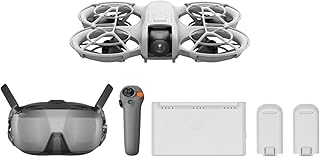
The DJI Neo Motion Fly More Combo centers on a palm-sized, 135-gram drone that shoots 4K footage while staying light enough to avoid FAA registration in many jurisdictions. Its standout features include palm takeoff and landing, a controller-free start that begins with a simple hand push, and subject tracking with QuickShots to simplify capturing engaging content. The compact design supports easy transport for hiking or family outings, and the 4K camera helps produce sharp footage with minimal setup.
Operational simplicity is a major strength. Neo’s subject-tracking helps maintain framing as you move, while eight QuickShots modes offer creative, ready-to-share clips. The combination kit adds extra batteries, enabling longer sessions without frequent recharges. Potential buyers should consider whether a highly portable, easy-to-use FPV option meets their need for dynamic aerial footage in outdoor settings. This model emphasizes beginner-friendly operation without compromising the core FPV experience.
DJI Neo 2 Motion Fly More Combo

The Neo 2 Motion Fly More Combo builds on the original with a slightly heavier frame and enhanced control features. At about 151 grams and with full-coverage propeller guards, it prioritizes safer transport and flight. Palm Takeoff and Landing remain a highlight, paired with gesture controls for hands-free operation. A smooth ActiveTrack system helps keep subjects in frame, and compatibility with an Apple Watch enables live viewing, status checks, and voice control for tracking adjustments.
Users can expect reliable tracking and a user-friendly learning curve, making this bundle suitable for newcomers who want dependable follow-me footage and quick-start flights. The device emphasizes safe handling and accessible control, while still offering the FPV thrill through precise tracking and stable stabilization. For hobbyists who frequently travel, the Fly More package’s extra batteries extend flight time, reducing downtime between shots.
DJI Avata 2 Fly Smart Combo

The Avata 2 Fly Smart Combo offers an immersive FPV experience with a 4K camera and a bundled Goggles N3 set. It emphasizes an immersive perspective through built-in 155° field of view and integrated propeller guards for safer indoor and outdoor flights. The motion-control interface enables intuitive, hand-based control that lowers the barrier to high-octane aerial stunts. One-push acrobatics support fast flips, rolls, and 180° drifts, enabling pilots to execute advanced maneuvers even after a brief learning period.
Goggles integration and a straightforward control scheme make this option appealing to users seeking an all-in-one solution that closely mimics a cockpit experience. Potential buyers should assess whether they value extreme immersion and agile maneuverability over portability, as a fully equipped kit tends to be larger and heavier than ultra-lightweight models.
DJI Flip (RC-N3)

The DJI Flip (RC-N3) is a compact FPV option that pairs a 4K UHD camera with a light frame under 249 grams. It emphasizes advanced stabilization via a 3-axis gimbal and long-range transmission, reaching up to tens of kilometers in ideal conditions. Palm takeoff and auto return features support safer operations, while an intuitive control experience aims to reduce the learning curve for new pilots exploring FPV flight. The included Goggles N3 compatibility ensures an integrated viewing experience, elevating immersion for aerial photography and cinematic shots.
Pros include portability, strong video transmission, and a mature ecosystem of accessories. Considerations involve ensuring you have adequate space to practice safely and evaluating whether your primary use case — freestyle flying, cinematic footage, or racing — aligns with the drone’s capabilities and flight time. This model is well-suited for users who want a capable, all-around FPV system in a compact package.
Holy Stone HS360S

The Holy Stone HS360S GPS drone targets beginners and hobbyists seeking reliable GPS-assisted flight with a 4K UHD camera and a 10000-foot control range. It folds for portability and uses brushless motors for efficiency and longer life. Features like Follow Me and Smart Return Home enhance safety for new pilots still learning to navigate airspace. The 5G transmission promise improves control responsiveness and video feed stability. This model offers a strong balance of affordability, safety features, and camera capability for FPV enthusiasts who want a straightforward, reliable entry into drone racing and videography.
When evaluating this drone, consider flight time, stability in windy conditions, and the reliability of GPS-based features. For those new to FPV, the HS360S provides a forgiving platform with guided safety features, while more experienced pilots may seek higher speeds, longer range, or more aggressive maneuverability available in other high-end kits.
Buying Guide: FPV Drones With Goggles
Key purchase considerations help you choose the best FPV setup for your goals. Each category below reflects common priorities among pilots and beginners alike.
- Purpose and experience level — Beginners usually benefit from palm-takeoff options, auto return, and built-in safety features, while advanced pilots may prioritize max range, drift control, and stunt capabilities.
- Weight and portability — Lighter drones often avoid certain registrations but may require gentler handling in gusty conditions. Heavier options can carry bigger cameras but may demand more careful operation and storage.
- Camera quality and stabilization — 4K cameras and gimbal stabilization deliver smoother footage, especially in motion-heavy shots. Check whether the camera is fixed or adjustable for framing versatility.
- Transmission range and latency — A stable video feed and responsive control are critical for FPV flight. Look for digital transmission systems and low-latency modes that align with your flying environment.
- Control interface — Palm takeoff/landing, gesture controls, and hand-held motion control simplify learning. Consider how these controls fit your comfort level and intended use (videography, racing, or casual flying).
- Battery life and charging — Fly-time varies by model. Fly More bundles typically provide extra batteries to extend sessions, but weight and balance can shift with additional power packs.
- Safety and protection — Propeller guards, return-to-home, and obstacle sensing improve safety for indoor and outdoor flights, particularly when learning complex maneuvers.
- Ecosystem and compatibility — Some models integrate with specific goggles, watches, or mobile apps. Ensure your accessories and future upgrades align with your current choice.
- Regulatory considerations — Lighter models may avoid certain registrations in some regions. Always verify local rules before flying to ensure compliance.
Overall, the selected options provide a spectrum from ultra-portable beginner kits to immersive, feature-rich setups. If you prioritize ease of use and capturing high-quality footage with minimal setup, models featuring palm takeoff, subject tracking, and bundled goggles are strong candidates. For those seeking adrenaline-pumped FPV experiences, consider systems that emphasize advanced maneuverability, larger field of view, and robust video transmission.