Best Flying Model Airplanes for Beginners: Easy Starts for Young Pilots
For newcomers to aerial hobby, choosing the right starter airplanes can make the difference between a thrilling chase in the sky and early frustration. This guide highlights five beginner-friendly options that emphasize stability, simple assembly, and safe operation. From smartphone-controlled planes to classic balsa kits, these picks cover evolutions from basic rubber-powered flyers to ready-to-fly RC models, helping new hobbyists build confidence and skills quickly.
| Product | Brand | Type | Why It Stands Out |
|---|---|---|---|
| POWERUP 4.0 The Next-Generation Smartphone Controlled Paper Airplane Kit | POWERUP Store | Smartphone-controlled paper airplane | Autopilot, gyro stabilizer, connected app for logs and designs |
| Granite Mountain Products Balsa Wood Airplane Kits | GRANITE MOUNTAIN PRODUCTS Store | Wooden model gliders and rubber-band planes | Made in USA, easy slot-and-tab assembly, no glue |
| LEAMBE 4 Channel RC Plane | LEAMBE | Ready-to-fly RC plane | Three learning modes, protective tech for beginners |
| Rubber Powered Model Airplanes: Comprehensive Guides | Don Ross (Author) | Instructional book | Foundational building and flying basics |
| Balsa Wood Airplane Kit – 4 Pack | Various | Kit with four planes | No glue needed, long-distance flights, easy assembly |
Each option below includes a concise look at what makes it suitable for beginners, practical setup tips, and how it supports learning fundamentals like flight stability, control, and safe handling. Reading the small print on features helps align expectations with the experience you want to build.
POWERUP 4.0: Smartphone-Controlled Paper Airplane

The POWERUP 4.0 kit lets beginners pilot a foldable paper airplane via smartphone, introducing core flight concepts with autopilot and gyro stabilization. The onboard microprocessor calibrates for minor weather variations, while launch assist helps beginners achieve stable liftoff. This setup is appealing for classrooms and family projects, where learners can experiment with tricks like loops and barrel rolls using Acro Mode. The power of connected flying, through the POWERUP App, opens flight logging, design sharing, and friendly competition on leaderboards—an engaging way to practice precision and timing.
Key learning points for new pilots include developing spatial awareness, understanding pitch/roll responses, and mastering gentle control inputs. While it’s a paper airplane at heart, the included autopilot and wind stabilization provide a forgiving environment to practice basic aerodynamics and trimming. Safe handling is supported by light weight, compact design, and the avoidance of high-speed or heavy airframes. Suitable for ages 10+ with supervision, it’s a good gateway into more complex RC aircraft later.
Granite Mountain Balsa Wood Airplane Kits

This set offers four wooden airplanes, including two rubber-band powered propeller planes and two balsa gliders. Made in the USA, the kits emphasize simple slot-and-tab construction, with no glue required for assembly. The 12-inch wings provide steady flight performance, enabling beginners to launch skyward and watch planes glide or perform light aerobatics with minimal fuss. The sturdy balsawood construction adds tactile satisfaction, and the durability helps new flyers recover from small misalignments during re-launches.
Educational value centers on material science and structural design, as learners see how lighter materials interact with wind and gravity. The absence of adhesives also reduces mess and speeds up the build, making it practical for group activities or home projects. Ideal for budding hobbyists who want a tangible, hands-on introduction to aviation concepts without electric components or complex controls.
LEAMBE 4 Channel RC Plane

The LEAMBE RC Plane is designed as a beginner-friendly aerobatic model with 4-channel control. Its lightweight elastomer foam construction balances durability with flight responsiveness, making it easier to handle in outdoor environments. The aircraft supports three learning modes—Beginner, Intermediate, and Experienced—allowing newcomers to incrementally challenge themselves as skills improve. A propeller saver tech helps protect the propeller from impact damage, a practical feature for new pilots who are still learning proper nose-tall orientation and landings.
Worth noting is the emphasis on progressive learning rather than a single, fixed difficulty. In practice, beginners can start with stable, gentle flights and gradually introduce more complex maneuvers as confidence grows. This model also serves well for indoor demonstrations or small outdoor spaces, reinforcing control inputs, timing, and safe airspace awareness.
Rubber Powered Model Airplanes: Comprehensive Guide
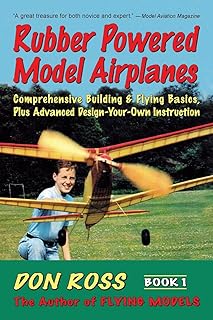
This instructional book provides foundational building and flying basics for rubber-powered airplanes. It covers design principles, wing loading, propulsion considerations, and flight planning—useful for beginners who want to understand the underpinnings of classic free-flight aircraft. The text helps readers translate theoretical concepts into practical builds, encouraging experimentation with different wing shapes and tail configurations to optimize flight performance.
Reading this guide supports a deeper appreciation of aerodynamics without immediately jumping into radio-controlled systems. It’s a gateway to more advanced kits and designs, including balsa gliders and rubber-powered planes, making it a strong supplement for a learning-focused hobbyist.
Balsa Wood Airplane Kit – 4 Pack
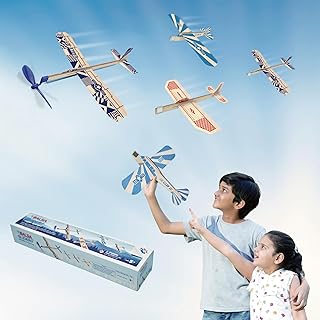
This four-pack focuses on long-distance flight with reinforced noses and 12-inch wings to reach flights up to 50 feet when hand-launched or rubber-band powered. The easy slot-tab assembly eliminates glue, speeding setup and reducing mess, which is ideal for guided classroom activities or family projects. The classic nostalgia of balsawood meets modern quality, providing a tactile, engaging introduction to model aviation and basic flight dynamics for beginners and younger flyers alike.
Buying Guide
Key considerations for beginners include your preferred learning style, space availability, and how you want to progress in the hobby. Here are some perspectives to help inform a decision:
- Learning curve and control: Start with simpler options such as rubber-powered or paper/foam aircraft to build confidence before advancing to RC planes.
- Durability vs. performance: Foam and balsawood offer different balances. Foam is forgiving and inexpensive; balsawood provides tactile feedback and a traditional experience.
- Power system and controls: Ready-to-fly RC planes offer more control precision but require more setup and maintenance than non-electrified or rubber-powered models.
- Safety and space: Ensure you have a safe, open area for takeoffs and landings. Consider wind and weather conditions that can impact beginner flights.
- Educational value: Books and kits that explain aerodynamics, wing design, and propulsion can accelerate learning and encourage experimentation.
- Future growth: Look for products that scale with your skills—apps with flight logs, modular kits, and additional aircraft designs.
When selecting a starter kit, consider both immediate playability and long-term learning potential. A balanced mix of hands-on assembly, flight practice, and theoretical understanding accelerates progress and sustains interest for new enthusiasts.