Best Drone Transmitters and Receivers for Reliable Remote Control
Finding the best drone transmitter and receiver is essential for achieving optimal control, range, and signal stability in your remote-controlled aircraft or drone. This guide presents a selection of high-quality 2.4GHz RC transmitters and paired receivers popular among drone and RC enthusiasts. Below is a summary table highlighting the key features of each product.
| Product | Channels | Frequency | Receiver Compatibility | Key Feature |
|---|---|---|---|---|
| FLYSKY FS-i6X 10CH | 10 (default 6) | 2.4GHz | FS-iA6B / FS-iA10B | Bidirectional communication, multi-channel hopping |
| Alaohu FS-i6X RC Transmitter | 10 (PWM 6CH) | 2.4GHz AFHDS2A | AFHDS2A series receivers | Stable signal, long range, multi-mode support |
| Radiolink AT10II 12CH | 12 | 2.4GHz | R12DS | Telemetry, long control range, anti-interference |
| DTXMX FS-i6X 10CH | 10 | 2.4GHz | FS-iA10B | Unique ID recognition, bidirectional communication |
| HAWK’S WORK FS-i6X 10CH | 10 | 2.4GHz | iA6B / iA10B | Versatile model compatibility, customizable mode |
FLYSKY FS-i6X 10CH RC Transmitter and FS-iA6B Receiver
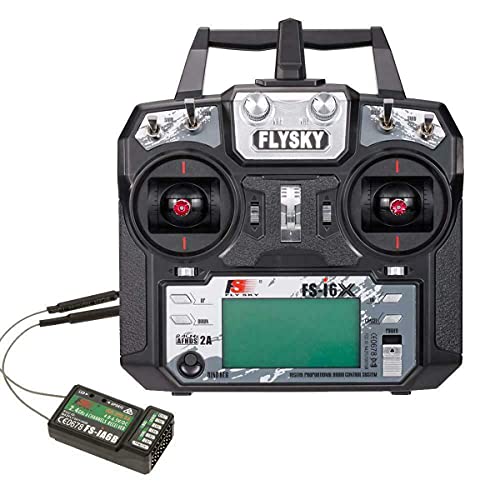
This FLYSKY FS-i6X system operates on a 2.4GHz frequency with a bandwidth consisting of 135 channels and adopting multi-channel hopping between 16 channels to reduce interference. The transmitter supports bidirectional communication, allowing it to both send and receive real-time data such as temperature and altitude from compatible sensors. It includes servo calibration and full i-BUS support.
The system comes with the default 6-channel FS-iA6B receiver, but users can unlock 10 channels by using the FS-iA10B receiver. Its robust signal hopping technique enhances reliability and prevents interference from other transmitters.
Alaohu FS-i6X RC Transmitter and FS-iA6B Receiver System

The Alaohu FS-i6X features a stable 2.4GHz AFHDS2A protocol that provides long remote control distance and high signal stability. It accommodates multiple connection modes for RC aircraft, cars, and boats. This system is flexible, supporting up to 10 channels via the FS-iA10B receiver, which can be paired to open CH10 in the transmitter menu.
The receiver outputs PWM on 6 channels, or alternatively PPM, S.bus, or i.bus across up to 10 channels, selectable via the transmitter menu settings. This versatility allows users to tailor the system to various RC models, including multirotors and fixed-wing aircraft.
Radiolink AT10II 12 Channels RC Transmitter and R12DS Receiver

The Radiolink AT10II transmitter employs DSSS and FHSS communication technologies combined with a high-gain 7dBi antenna to ensure excellent anti-interference capabilities. With a theoretical control range reaching up to 2.5 miles (4km) in the air, it suits long-distance flight tasks.
This 12-channel transmitter includes voltage telemetry displayed on screen when paired with the included PRM-01 module. It supports telemetry features like battery voltage, speed, altitude, RSSI, and distance when integrated with compatible flight controllers. Additional key features include dual/triple rates, throttle lock, fail-safe settings, and endpoint adjustments.
DTXMX FS-i6X 10CH Transmitter and FS-iA10B Receiver

This DTXMX FS-i6X transmitter operates on a 2.4GHz bandwidth with 135 channels and uses a frequency hopping spread spectrum to minimize signal interference. It uniquely pairs with an FS-iA10B receiver, which comes with its own unique ID to avoid accidental cross-connections with other systems.
The system supports bidirectional communication, enabling the transmitter to display voltage data from the receiver when paired with an optional FS-CVT01 voltage module. This is ideal for pilots needing real-time battery voltage monitoring. The transmitter is designed for use with airplanes, helicopters, and FPV drones.
HAWK’S WORK FS-i6X 10CH Transmitter with FS-iA10B Receiver

The HAWK’S WORK FS-i6X package includes a 10-channel transmitter with options for 6 or 10-channel receivers. It features two joysticks, four switches, and two knobs, supporting a broad range of RC models from drones to boats and tanks.
Designed in Mode 2 with left-hand throttle control by default, the system is customizable to Mode 1. Its wide compatibility and multiple control inputs make it a versatile choice for enthusiasts flying various RC vehicles.
Buying Guide for Drone Transmitters and Receivers
When selecting a drone transmitter and receiver system, consider the following factors to ensure compatibility and performance:
Channel Count and Frequency
The number of channels determines how many functions you can control simultaneously. Entry-level drones require fewer channels (6-8), while advanced FPV racing drones or multi-rotors may require 10 or more. Always check that the transmitter and receiver operate on the 2.4GHz frequency band for optimal interference resistance.
Communication Protocol and Signal Stability
Look for systems employing advanced protocols like AFHDS2A, DSSS, or FHSS, which reduce interference and provide reliable connections. Multi-channel hopping and bidirectional communication add robustness and real-time telemetry capabilities.
Telemetry and Data Feedback
Telemetry-enabled transmitters offer valuable real-time information such as battery voltage, altitude, speed, and signal strength. This information helps maintain safe operation and avoid signal loss during flight.
Compatibility and Expandability
Ensure the transmitter is compatible with multiple receiver models if you plan to upgrade or switch drones. Support for different output modes (PWM, PPM, S.bus, i.bus) allows greater flexibility across drone types and related RC vehicles.
Range and Antenna Quality
Consider control range requirements specific to your use case. A high-gain antenna and anti-interference technology will improve signal reach and stability during long-distance flights.
User Interface and Customization
Evaluate the ergonomics of the transmitter, including joystick feel, switch placement, and screen readability. Systems offering programmable settings such as throttle curves, fail-safe, and switch customization can tailor the control experience for your preferences.
By carefully weighing these factors, you can select the ideal drone transmitter and receiver that best suits your flying needs, ensuring consistent and reliable control for all your drone adventures.