Best Drone Remote ID Broadcast Modules for FAA Compliance in 2026
The drone RID (Remote ID) broadcast module market offers a range of compliant options to help pilots meet FAA requirements while expanding flight capabilities. This article showcases five RID modules from reputable brands, highlighting key features, compatibility, and practical use cases for hobbyists and professional pilots alike. Explore how these modules integrate with popular drone models, improve safety, and simplify regulatory compliance.
Summary of selected products:
| Product | Brand | Key Feature | Compatibility Notes |
|---|---|---|---|
| Ruko R111S RID Module | Ruko Store | Upgraded beeper, real-time GPS tracking, dual positioning | FAA compliant; fits Ruko and various other brands/models |
| Holyton RID Module | Holyton Store | Remote ID compliance, long client-listed compatibility | Designed for GPS drones; multiple FPV and camera drones |
| Potensic RID Module | Potensic Store | Safe charging cable, broad compatibility, IP54 design | Works with Potensic and other ≥250 g drones |
| Holyton Buzzer & Strobe RID | Holyton Store | Buzzer, customizable strobes, IP54 | FAA compliant; supports many popular models |
| Holy Stone RID Module | Holy Stone Store | FAA compliance focus, broad drone compatibility | Fits Holy Stone and other US-market drones |
Ruko R111S RID Module With Beeper

The R111S remote ID module from Ruko adds a built-in beeper to help locate a drone quickly after a flight, an especially useful feature when the aircraft lands in hard-to-reach areas. Beyond locating capability, the device supports dual positioning by integrating with the aircraft’s original location data and a companion app to provide precise real-time tracking within a range of 500-1000 meters. This makes it suitable for FPV drones, fixed-wing aircraft, and multi-rotor configurations that require reliable tracking and easy recovery. The module claims FAA compliance for drones over 250 g and emphasizes compatibility with a broad range of brands and models, including popular DJI options. The R111S is positioned as a versatile upgrade for both hobbyists and professionals who demand visibility, safety, and regulatory adherence in one package. Key considerations include beeper placement, weight impact on flight characteristics, and how the app integrates with existing flight data.
Holyton RID Module for GPS Drones

Holyton’s RID module for GPS drones emphasizes compliant operation and broad compatibility with a range of FPV and consumer drones, including models popular for aerial photography and recreational flying. The product listing stresses compliance with FAA requirements and addresses common regulatory concerns for pilots operating heavier-than-air craft. A notable focus is outdoor usability, with guidance on optimizing RID performance in unobstructed space to improve searchability and monitor real-time location. The design appears tailored to pilots who want a straightforward, plug-and-fly solution with robust compatibility and straightforward setup. Considerations include app support, battery life, and how the device wires into the drone’s power system and flight controller.
Potensic FAA Compliant Remote ID Module

Potensic advertises a Remote ID module designed to meet FAA compliance for drones over 250 g. A key feature is the safe charging cable with overcharge protection, which helps prevent charging hazards during maintenance. The module is promoted as compatible with multiple Potensic models like ATOM SE and Dreamer PRO, with broader applicability to other camera drones exceeding 250 g. The product notes emphasize ongoing compliance efforts and the ability to fly legally under FAA guidelines, making it a practical option for pilots who use Potensic hardware or want a broadly compatible RID solution. Potential considerations include charging safety, mounting options, and firmware/app support for regulatory reporting.
Holyton Remote ID Module With Buzzer and Strobe
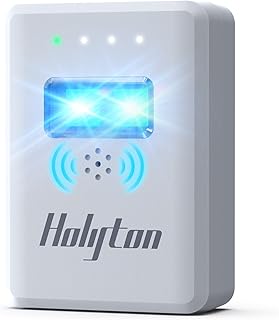
This Holyton RID module integrates a buzzer and customizable strobe lighting to enhance visibility during flight and in low-light conditions. The device supports FAA compliance and is positioned as a practical solution for pilots flying in various environments, including urban and rural settings. The IP54-rated housing suggests protection against dust and splashes, increasing durability for outdoor use. Users should assess battery life (listed at around four hours in the product description) and analyze how the app enables pattern customization for night operations. The module is suitable for a wide range of FPV and camera-equipped drones, with emphasis on safety, visibility, and regulatory compliance.
Holy Stone RID Module for 4K Drones

Holy Stone’s Remote ID broadcast module focuses on FAA regulatory compliance and broad compatibility with Holy Stone drones and other brands capable of 4K camera work. The module is designed to address common regulatory concerns by providing a consumer-friendly solution that helps drones meet Remote ID requirements. The description highlights compatibility with a variety of Holy Stone models, as well as other drones in the market, and emphasizes safety features such as protection for charging cycles and environmental tolerance for outdoor use. Prospective buyers may consider how the module integrates with Holy Stone’s ecosystem, power requirements, and any app-based data reporting or flight logging.
Buying Guide: RID Modules for Drones
- Regulatory compliance: Ensure the RID module explicitly states FAA compliance for drones over 250 g and supports the model lines you fly. Some modules emphasize “compliance” while others market broader compatibility; verify FAA documentation or the vendor’s compliance statements.
- Compatibility and integration: Check which drone brands and models are listed as compatible. Consider whether the module supports direct mounting on your current drone and if it requires additional accessories or adapters.
- Power and battery life: RID modules draw power from the drone or have their own battery. Compare stated flight-time implications, charging precautions, and IP/ruggedness ratings for outdoor use.
- Safety features: Look for built-in beepers, buzzers, and strobe lights that improve visibility and locate-ability. Assess whether these features align with your typical flying environment (open field vs. urban areas).
- App and data management: A strong RID solution should offer a companion app for real-time tracking, flight logs, and status indicators. Confirm data privacy, ease of use, and platform compatibility (iOS/Android).
- Durability and environmental resilience: IP ratings (e.g., IP54) suggest dust and water resistance, which matters for outdoor flights and varying weather conditions. Assess build quality and mounting options.
- Installation and maintenance: Evaluate ease of installation, required conduits or wiring, and whether firmware updates are accessible to maintain regulatory compliance over time.
- Cost vs. value: Compare feature sets such as beepers, Strobe lighting, dual GPS tracking, and cross-brand compatibility. A higher upfront cost may be justified by improved safety and compliance.
- Future-proofing: FAA rules and RID standards can evolve. Prefer modules with ongoing firmware support and clear guidance from the manufacturer on compliance updates.
- User reviews and support: Check for real-world feedback regarding reliability, customer service responsiveness, and firmware update experiences to gauge long-term satisfaction.
Selecting a drone RID module involves balancing regulatory compliance with practical flight needs. For pilots who rely on precise tracking and quick recovery in challenging terrain, a module with a buzzer, robust GPS capabilities, and a strong app ecosystem can offer meaningful advantages. For hobbyists prioritizing broad compatibility and safe charging, a model with reliable power management and expanded brand support may be preferable. In all cases, verify that the chosen RID module aligns with your drone’s weight class, flight goals, and local regulatory environment.