Best Drone Kits for Schools to Inspire STEM Learning
Exploring drone technology in classrooms can boost hands-on learning in science, technology, engineering, and math. The following five drone kits for schools offer beginner-friendly assembly, practical flight practice, and opportunities to study key concepts such as propulsion, control systems, and computer-aided design. This guide highlights kit features, learning value, and how each supports classroom objectives.
| Product Name | Brand | Notes |
|---|---|---|
| DIY Drone Kit with Brushless Motor & Dual Camera | Unknown | High-power motors; optical flow; 360° flips |
| Quadrotor Drone DIY Kit: Brushless Motor, Optical Flow Hovering | Unknown | One-click takeoff/landing; 360° flips |
| F450 Drone Kit to Build | WORK | Frame, Pixhawk, GPS, power module; beginner to advanced |
| LED RC Drone for Kids 6+ | Unknown | Indoor/outdoor versatility; 360° stunt roll |
| Mini Drone for Kids and Beginners 5-in-1 | Unknown | 5 designs; altitude hold; 3D flips |
DIY Drone Kit With Brushless Motor And Dual Camera

This kit centers on a unique DIY drone that integrates optical flow positioning, video modules, and high-power brushless motors. Assembly is about 1.5 hours and suits learners aged 14 and above. The kit emphasizes drone fundamentals during construction and supports indoor and outdoor flight with features like 360° flips and real-time video transmission. The difficulty level is high, requiring patience and hands-on skills to master control and performance.
Quadrotor Drone DIY Kit With Optical Flow And One-Click Takeoff
This project invites learners to assemble every component from screws to the main frame, totaling roughly 1.5 hours. It is recommended for users over 14 years old and is rated high for difficulty. Beyond assembly, the kit provides extensive drone knowledge, helping students understand core concepts while preparing them to showcase their work confidently. Flight features include 360° flips, headless mode, and real-time video viewing.
F450 Drone Kit To Build
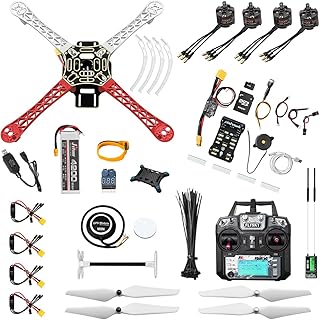
Designed for both beginners and advanced users, this F450 kit includes a complete frame plus essential flight components like Pixhawk, GPS, power module, ESCs, and brushless motors. It offers increased capacity and space for experimenting with larger setups, including room for Raspberry Pi, cameras, and sensors. A quick-start guide is provided to help new builders assemble and calibrate the drone efficiently, supporting classroom projects aimed at hands-on engineering and data collection.
LED RC Drone for Kids 6+

Targeted at younger pilots, this blue-yellow LED drone delivers user-friendly controls, one-touch takeoff/landing, and a dual-joystick layout for intuitive flight. It includes five LED light modes for visually engaging flights and offers a balanced mix of indoor stability with optional outdoor use. The 360° stunt roll feature adds excitement while maintaining accessible control friendly to beginners and classrooms focusing on safe operation and fundamental aerodynamics.
Mini Drone for Kids And Beginners

This 5-in-1 DIY drone kit offers five distinct designs with 159 easy-build pieces. It emphasizes beginner-friendly features such as altitude hold, headless mode, one-key takeoff/landing, and emergency stop functionality. The design supports gradual skill progression through 3D flips and three speed modes, encouraging a hands-on exploration of drone mechanics and STEM concepts suitable for classrooms and home-learning environments.
Buying Guide
- Curriculum fit: Look for kits with modular lessons that align to STEM standards, covering topics like propulsion, flight control, sensors, and programming fundamentals.
- Difficulty progression: Choose sets that offer varying levels of difficulty or steps that students can complete independently, with teacher-guided scaffolding as needed.
- Safety and supervision: Ensure kits include clear safety guidelines and components designed for controlled indoor use, with appropriate limits on speed and battery handling.
- Component quality: Prioritize kits with robust frames, reliable motors, and accurate optical flow or GPS modules to minimize maintenance and maximize classroom time.
- Expandability: Consider systems that allow upgrading sensors, adding cameras, or integrating microcontrollers for cross-disciplinary projects (e.g., coding, data logging, or IoT).
- Assessment potential: Favor kits that enable measurable outcomes—assembly time, flight stability metrics, code snippets, or presentation-ready demonstrations.
- Support resources: Look for teacher guides, student handouts, and video tutorials to streamline lesson planning and troubleshooting.
- Cost considerations: Evaluate total cost for the classroom, including spares, replacement parts, and licensing for any companion software.
- Accessibility: Ensure components are suitable for a range of ages and abilities, with safety-first designs and clear instructions.
- Longevity: Favor kits with widely available spare parts and consistent supplier support to ensure ongoing use across school terms.