Best Computer Controlled Drone Kits for Hands-on Learning and Building
Explore top computer-controlled drone kits that empower learners to assemble, program, and fly with enhanced control systems. This guide highlights five standout kits that blend hardware and firmware for DIY enthusiasts, students, and hobbyists pursuing deeper understandings of flight dynamics, sensors, and integrated computation.
Summary of chosen products:
| Product | Brand | Key Focus | Approximate Takeoff Weight | Link |
|---|---|---|---|---|
| F450 Drone Kit to build, DIY Quadcopter Set | WORK | Frame, Pixhawk, GPS, power module, ESC, brushless motors | Up to ~1.8 kg | Amazon |
| DIY Drone Kit with Brushless Motor & Dual Camera | — | Brushless motors, optical flow, dual camera, one-click controls | — | Amazon |
| Mini Drone for Kids and Beginners, 5-In-1 Kit | — | Five designs, altitude hold, 3D flips | — | Amazon |
| CADDXFPV Protos FPV Drone RTF Kit | CADDXFPV Store | Walksnail 6g VTX, 1080p/60fps video, lightweight | Very light | Amazon |
| Quadrotor Drone DIY Kit with Optical Flow | — | Brushless motor, optical flow, 360° flips | — | Amazon |
F450 Drone Kit to Build, DIY Quadcopter Set
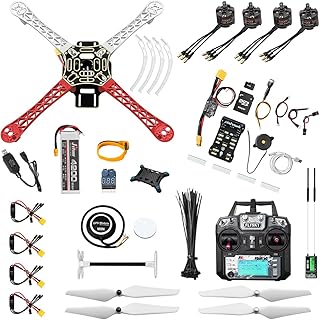
The F450 drone kit from WORK is pitched as a first-rate platform for DIY learners and advanced researchers alike. With a wheelbase of 450mm and a maximum take-off weight around 1.8 kg, this kit offers ample space for additional flight control hardware, sensors, cameras, or microcomputing modules such as a Raspberry Pi. The package includes a Pixhawk flight controller, GPS, power module, electronic speed controllers (ESCs), brushless motors, propellers, battery, an RC transmitter and receiver, plus an instructional guide. The quick-start resources aim to accelerate assembly and calibration, making it suitable for classrooms or independent study. Users can explore flight control tuning, sensor integration, and software customization as they progress from basic stabilization to advanced mission planning.
Key considerations:
– Hardware scope supports expansion for experiments and research projects.
– The included Pixhawk and GPS enable standard open-source flight stacks and mission planning.
– Clarity of setup instructions can influence how quickly beginners become proficient.
– Capacity for additional payloads encourages experimentation with aerial data collection.
DIY Drone Kit with Brushless Motor & Dual Camera

This DIY drone kit emphasizes hands-on learning with high-power brushless motors, optical flow hovering, and dual cameras. The assembly timeline is roughly 1.5 hours and is suited to older beginners (suggested age 14+). The kit doubles as an educational project, enabling learners to study drone technology while assembling the flight system. Notable features include 360° flips, One-Key takeoff/landing, headless mode, and real-time video transmission. The kit’s difficulty rating highlights the need for patience and careful following of instructions, making it a strong option for makers who want a robust, demonstrable learning experience.
Key considerations:
– Dual camera setup supports simple video learning and debugging.
– The included optical flow module helps with stable indoor and outdoor hover.
– The project’s complexity fosters a deeper understanding but may require more time and attention.
– Suitable for classroom projects or ambitious DIY builds.
Mini Drone for Kids and Beginners, 5-In-1 Kit

This 5-in-1 DIY drone kit is designed for kids and beginners, featuring 159 easy-build pieces that let children explore multiple designs and color schemes. Core features include altitude hold, headless mode, one-key take-off/landing, low power warning, and emergency stop options. The kit supports creativity and foundational STEM concepts, helping young builders understand aerodynamics and control without excessive complexity. Three-dimensional flips and adjustable speed modes expand play while reinforcing motor control concepts. The kit’s straightforward assembly aims to be engaging for ages and all skill levels.
Key considerations:
– Age-appropriate design with beginner-friendly controls.
– Versatile design set fosters imagination and experimentation.
– Safety features like low power alerts and emergency stop are beneficial for new pilots.
– A good introduction to RC flight concepts and basic programming ideas.
CADDXFPV Protos FPV Drone RTF Kit
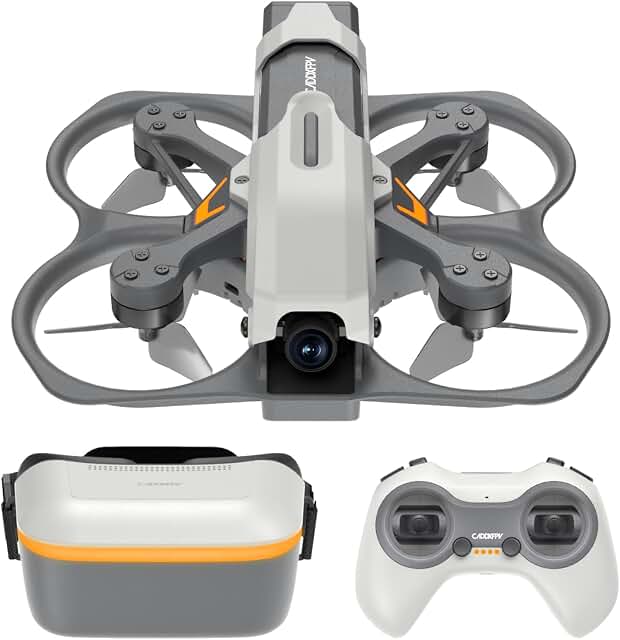
The CADDXFPV Protos FPV Drone RTF Kit is a compact, entry-friendly FPV system designed for both beginners and freestyle enthusiasts. It weighs around 100g and measures just 1.6 inches, making it a palm-sized platform for rapid testing and learning. The kit includes a Walksnail 6G video transmitter for HD video feed and a 1080p/60fps camera for crisp footage. A 3-in-1 smart charger supports three batteries, and the built-in safety protections minimize downtime during practice. Its light weight and simplified setup enable quick flights and iterative debugging, making it suitable for practice sessions and skill-building in FPV navigation, buffering, and video transmission.
Key considerations:
– Lightweight design supports agile flight and safety margins.
– Integrated HD VTX and camera improve learning experience with real-time feedback.
– Real-time charging and battery management reduce downtime between sessions.
– Suitable for beginners who want to explore FPV without heavy regulatory concerns for flying devices.
Quadrotor Drone DIY Kit with Optical Flow
This kit emphasizes a complete DIY approach for enthusiasts who want to assemble the drone from individual components. It features brushless motors, optical flow positioning, one-click takeoff and landing, and 360° flips. The assembly process is detailed, with an estimated build time around 1.5 hours, and it suggests users aged 14 and older. The project offers substantial educational value by combining mechanical assembly with flight control concepts. Users can observe how sensor data influences stabilization, navigation, and flight paths, providing a robust foundation for further experimentation in autonomous flight and computer-augmented piloting.
Buying Guide: Key Purchase Considerations for Computer-Controlled Drone Kits
- Experience level and safety: Assess whether the kit targets beginners, intermediate hobbyists, or advanced builders. Look for age recommendations, clear safety notes, and beginner-friendly guidance.
- Flight controller and sensors: A kit with a proven flight controller (like Pixhawk) and sensors (GPS, optical flow, barometer) enables more accurate stabilization, autonomous missions, and data collection.
- Expandability and upgrade paths: Consider whether you can add payloads, upgrades, or additional sensors; ensure the frame size and power system support future components.
- Video and imaging capabilities: For learning FPV or aerial photography, prioritize kits with reliable video transmission, cameras, and display options, while accounting for latency and interference.
- Build difficulty and time commitment: Some kits require substantial assembly and tuning; evaluate the estimated build time and the availability of guides or community support.
- Community and support: A strong user community and robust documentation help with troubleshooting, calibration, and learning trajectories.
- Regulatory considerations: Smaller FPV or micro drones may have fewer regulatory hurdles, but always check local rules and any required registrations before flying.
- Educational value: If the goal is learning, prioritize kits that clearly connect hardware, firmware, and software practice with measurable outcomes or projects.
- Maintenance and spare parts: Ensure access to spare parts, service support, and clear maintenance steps to sustain long-term use.
- Budget and total cost of ownership: Include potential needs for extra batteries, props, or mounting hardware; compare total costs beyond the initial kit price.
The selected products cover a spectrum from classroom-friendly kits to compact FPV experiences, each emphasizing hands-on learning, sensor integration, and flight control concepts. When choosing, consider your learning objectives—whether you want to study autonomous navigation, FPV racing, or simple mechanical assembly—and match the kit’s capabilities to those goals.