Best Budget Racing Drone Picks for Enthusiasts and Beginners
Budget-friendly racing drones let newcomers learn fast while still delivering exciting FPV action. This guide highlights five affordable options with features geared toward beginners and hobbyists. Each pick below includes a quick snapshot of why it stands out, plus practical notes on setup, durability, and performance for entry-level racing or freestyle practice.
| Product | Brand | Key Feature |
|---|---|---|
| APEX FPV Drone Kit | APEX | Low-latency 5.8G transmission with beginner-friendly Altitude Mode |
| Tiny Hawk Micro Drone Free Style 2 | Tiny Hawk | Lightweight, durable carbon frame; real FPV 5.8G |
| EZ Pilot Indoor Outdoor Racing FPV Drone | Tiny Hawk | Indoor/outdoor versatility with real FPV and goggles |
| Galvanox Racing RC Drone with Obstacle Kit | GALVANOX | Drone plus obstacle course for beginner-friendly challenges |
| Readytosky 250mm FPV Frame Kit | Readytosky | Rigid carbon fiber frame for builds and upgrades |
Choosing the right budget racer involves balancing build quality, ease of use, and upgrade potential. The products below are selected for affordability, accessibility, and the ability to grow with you as you gain skill. Each section explains what to expect, what makes it stand out, and practical tips for getting the most from a beginner-friendly FPV setup.
APEX FPV Drone Kit With Goggles

The APEX FPV Drone Kit combines a ready-to-fly experience with features aimed at newcomers and aspiring pilots. The kit includes FPV goggles and a drone capable of immersive FPV flights thanks to a wide 120° field of view. The Manual Mode is described as suitable for professionals, while a Beginner Altitude Mode helps newcomers maintain stable flight. The low-latency transmission reduces video lag, making it easier to respond to the drone’s movements in real time. This blend of accessibility and potential for freestyle flight makes it a versatile budget pick for first-time racers and hobbyists.
Performance notes: The kit emphasizes a balance between control and excitement. Beginners can practice in Altitude Mode to gain confidence, then progress to Manual Mode as skills improve. The goggles’ low latency supports smoother tracking, which is critical in tight tracks. The drone’s drop-resistant design adds durability for learning crashes, a common part of early flights. For a budget build, it provides a solid starting point without requiring immediate upgrades.
Tiny Hawk Micro Drone Free Style 2
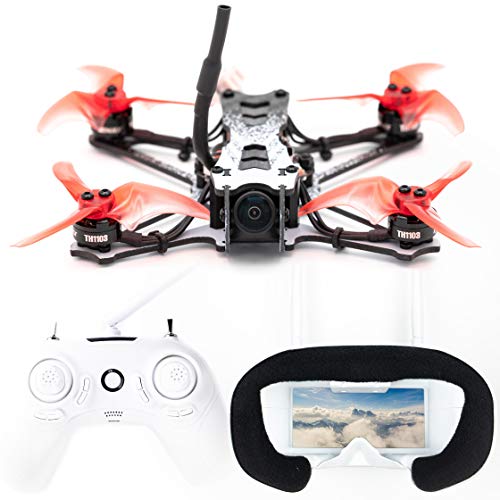
The Tiny Hawk Micro Drone Free Style 2 is designed for portability and performance in a compact form. The frame uses lightweight carbon fiber to maximize durability while keeping weight low for agile handling. Real FPV with 5.8 GHz transmission supports responsive control and immersive flying. This model is especially appealing for pilots who want a small, durable drone that can endure frequent practice sessions and quick freestyle flights without a heavy upfront investment.
Practical considerations: The micro size suits indoor use or small outdoor spaces, where precise throttle control is essential. The durable carbon frame helps absorb minor crashes, which are common in early FPV runs. For beginners, the compact design reduces risk to surrounding items and people during learning, while still offering a genuine FPV experience.
EZ Pilot Indoor Outdoor Racing FPV Drone
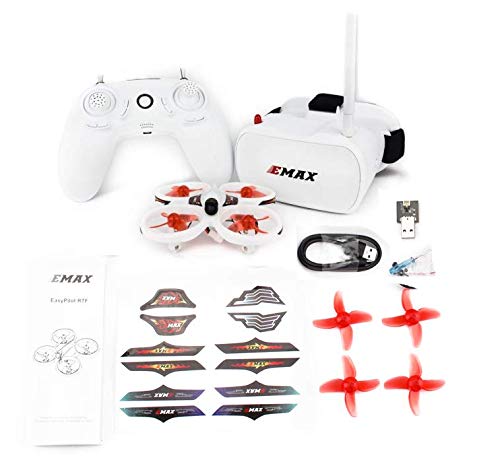
The EZ Pilot is pitched as a beginner-friendly racing FPV kit, with altitude control and one-stick flight assistance to ease new pilots into the sport. It comes with FPV goggles, enabling a true first-person view without needing a smartphone. The package is designed to help users learn flight fundamentals, including takeoffs, landings, and hovering, while still offering the excitement of competitive FPV racing. This model can be a strong stepping stone for pilots who plan to progress to more advanced builds later.
Considerations for beginners: Altitude control is useful for learning stability, but pilots should still practice transitions between modes to gain confidence. The included goggles are a core value for FPV immersion, helping users understand throttle, attitude, and orientation in real time. Given its beginner orientation, this kit is best for learners who want an all-in-one package to minimize separate purchases.
Galvanox Racing RC Drone With Obstacle Kit

The Galvanox Racing RC Drone pairs flight capability with an obstacle course to introduce structured practice. This kit is targeted at beginners who want guided, hands-on challenges that simulate real race conditions in a controlled setting. The package supports beginner-friendly modes and one-click takeoff/landing, which reduces setup friction for first-time flyers. High- and low-speed options, along with an intelligent height setting, support progression from easy to more demanding flight scenarios.
Where this stands out: The obstacle course provides a tangible way to measure progress and build confidence under realistic, race-like constraints. The dual focus on drone flight and obstacle navigation makes it a compelling option for families or clubs seeking shared, skill-building activities. The durability and simple controls help ensure consistent, safe practice sessions.
Readytosky 250mm FPV Frame Kit
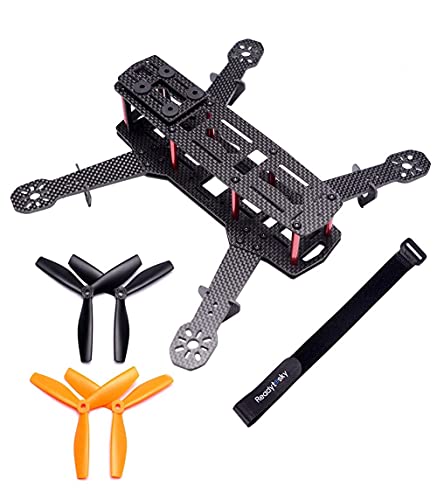
The Readytosky 250mm FPV frame kit offers a robust foundation for builders who want to customize or upgrade on a budget. The 4mm carbon fiber frame arms and integrated shock-absorbing features help tolerate hard landings and rough handling during practice. The kit emphasizes spacious internal geometry that accommodates FPV gear and wiring, making assembly and later upgrades more manageable. This frame is ideal for hobbyists who want to tailor components to their preferred setup while maintaining a cost-effective baseline.
Key advantages: A sturdy, modular frame supports experimentation with different motors, ESCs, and flight controllers. The generous space helps keep wiring tidy, reducing interference and cooling concerns. The overall durability and modularity align with budget-conscious builders who intend to upgrade gradually rather than replace entire drones as skill grows.
Buying Guide: Budget FPV Racing Drones
- Purpose and space: Consider where you plan to fly. Indoor flying benefits from smaller, lighter frames, while outdoor practice may require sturdier builds and longer battery life.
- Ease of use vs. upgrade potential: Some kits are strictly beginner-oriented, while others offer scalable components for later upgrades. If you expect to develop racing skills, prioritize frames and motors that are easy to replace or upgrade.
- Durability and crash tolerance: Look for frames with carbon fiber or impact-resistant materials and consider protective features like dampers or guards to minimize damage during early crashes.
- Flight controller features: Mode options (Altitude/Manual) help beginners learn gradually. Ensure the kit supports these modes and offers reliable FPV transmission with low latency for a responsive experience.
- Goggles and compatibility: FPV goggles are essential for immersive flight. Confirm compatibility with the drone’s video transmitter (VTX) and whether the goggles are included in the package or sold separately.
- Size and weight class: A 250mm class is common for entry-level racing; it balances speed, agility, and portability. Heavier builds can be more stable but require more power and robust batteries.
- Battery and endurance: Short flight times are typical in beginner FPV setups. Check if the kit includes batteries and whether you can upgrade to higher-capacity packs without adding excessive weight.
- Community and support: Brands with active communities and clear manuals help beginners troubleshoot issues, find spare parts, and access upgrades.
In evaluating these options, consider your learning curve, space to fly, and whether you want a fully ready-to-fly package or a build-your-own path with upgrade potential. The five picks above balance affordability with practical FPV features, making them suitable for American hobbyists seeking a reliable start in budget racing drones.