Best RC Plane Camera Goggles for FPV Flying
FPV enthusiasts demand clear visuals, low latency, and reliable signal when piloting RC planes, drones, or mini aircraft. The following overview highlights five popular RC plane camera goggles and FPV headsets that combine immersion, versatility, and user-friendly features. Each option offers different screen sizes, antenna configurations, and recording capabilities to suit hobbyists and pilots across skill levels. Read on to compare features and make an informed choice for your next FPV session.
| Product | Brand |
|---|---|
| 5.8G FPV Goggles with Antennas: 3 Inch Screen | SPEEDY BEE Store |
| EV800D FPV Goggles with DVR | SPEEDY BEE Store |
| DJI Goggles N3 | DJI Store |
| WT03 Micro FPV AIO 600TVL Camera | Wolfwhoop Store |
| Fat Shark ECHO FPV Goggles | Shark |
5.8G FPV Goggles With Antennas
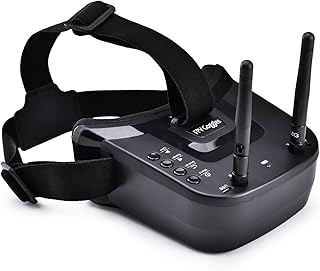
These SPEEDY BEE FPV goggles deliver dual antennas for enhanced signal stability, making them well-suited for racing and cinematic flights. Their 3-inch display keeps the headset compact while offering a clear, responsive view. The device covers 40 channels in RaceBand and includes auto-search for quick channel switching. Low power consumption supports longer sessions, ideal for weekend pilots and hobbyists who want reliable performance without frequent recharging. The compact design works with a variety of analog FPV cameras and transmitters, offering an approachable entry point without sacrificing signal reliability.
EV800D FPV Goggles With DVR

EV800D Goggles combine immersive viewing with built-in DVR for convenient recording of flights and adventures. Dual-antenna reception improves signal stability, reducing dropouts during fast maneuvers. The 5-inch display provides a more expansive field of view while maintaining a portable form factor. A key benefit is seamless real-time video return with minimal delay, which helps pilots react quickly during complex aerial sequences. Like other Speedy Bee offerings, these goggles emphasize reliability and user-friendly setup for analog FPV systems.
DJI Goggles N3

DJI Goggles N3 offer an ultra-wide 1080p display with a broad 54-degree field of view, designed to deliver an expansive, immersive flight experience. The spacious interior accommodates glasses without needing additional diopter adjustments, enabling quick, comfortable use. The N3 integrates a high-quality screen with robust video transmission, supporting a range of RC motion platforms and FPV drones. While priced for serious enthusiasts, the N3 emphasizes comfort, clarity, and a seamless user experience critical for long sessions and cinematic filming.
WT03 Micro FPV AIO Camera

The WT03 Micro FPV AIO camera is compact and lightweight, designed for small aircraft and DIY builds. Its 600TVL resolution provides adequate clarity for micro aircraft, with 5.8G transmitter compatibility and a cloverleaf antenna for reliable reception. The micro footprint makes it easy to integrate with various RX setups and flight controllers. The plug-and-play nature simplifies assembly for hobbyists who prefer quick upgrades or custom configurations, while maintaining compatibility across common FPV components.
Fat Shark ECHO FPV Goggles

Fat Shark ECHO Goggles position themselves as a budget-friendly option with a strong feature set for FPV pilots. They include an integrated four-band, 40-channel receiver and a built-in DVR for on-the-go recording. The device supports an AV-in option for additional input flexibility and an onboard channel scanner that identifies the strongest video feed. An accessible display and an easy-to-use interface make the ECHO appealing for newcomers and casual pilots seeking a robust, economical FPV experience without extra cables or accessories.
Buying Guide
- Display size and optics: Larger screens and wider fields of view improve immersion but increase headset weight. Consider whether you prefer compact goggles for mobility or larger screens for detailed viewing during longer flights.
- Receiver and antenna design: Dual-antenna setups typically offer more stable signals, especially in congested environments. Check for auto-search and channel coverage to minimize tuning time mid-flight.
- Recording and DVR: Built-in DVRs let you replay flights later. If you plan to capture footage, verify the DVR’s supported video formats and storage options.
- Compatibility: Ensure compatibility with your FPV camera, transmitter, and flight controller. Some units are optimized for analog FPV, while others support digital feeds or AR features.
- Power and runtime: Look for low-power designs to maximize flight time. Consider battery options and charging methods suited to your toolkit.
- Comfort and fit: Comfort matters during long sessions. Check padding, adjustable straps, and whether the headset fits over glasses comfortably.
- Ease of setup: For beginners, plug-and-play solutions with straightforward menus and clear indicators reduce setup time.
- Support and ecosystem: A strong user community and readily available spare parts or accessories can help with troubleshooting and upgrades.
- Budget and use case: Budget variants often provide essential FPV capabilities, while premium models add features like higher resolution, advanced diorama modes, or streaming capabilities. Choose based on your flying style and how often you’ll upgrade.